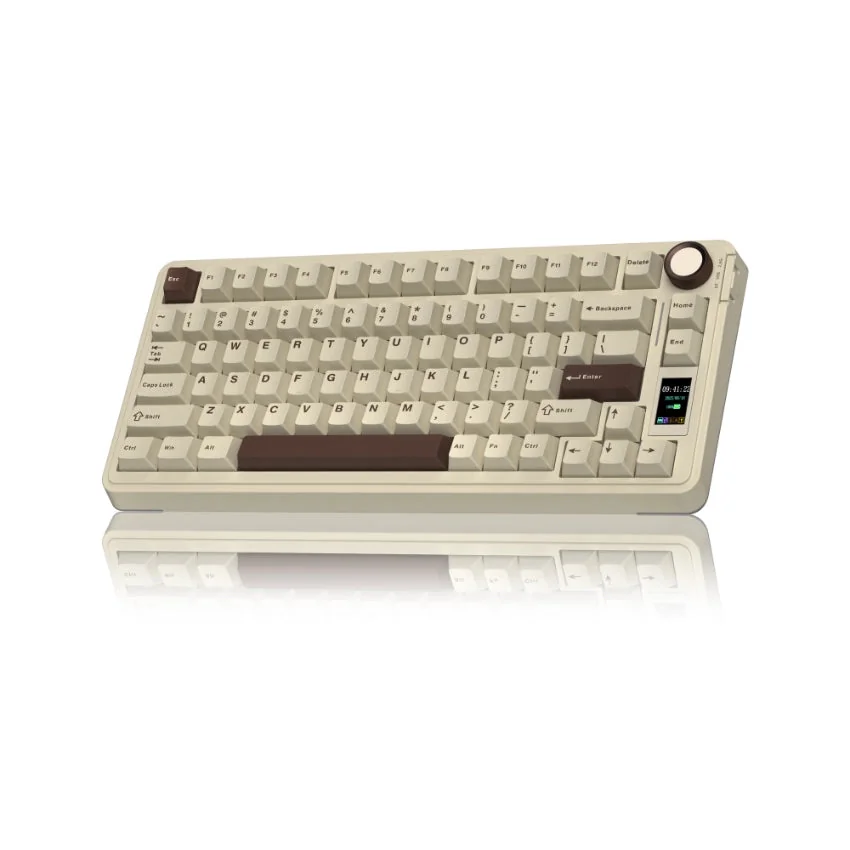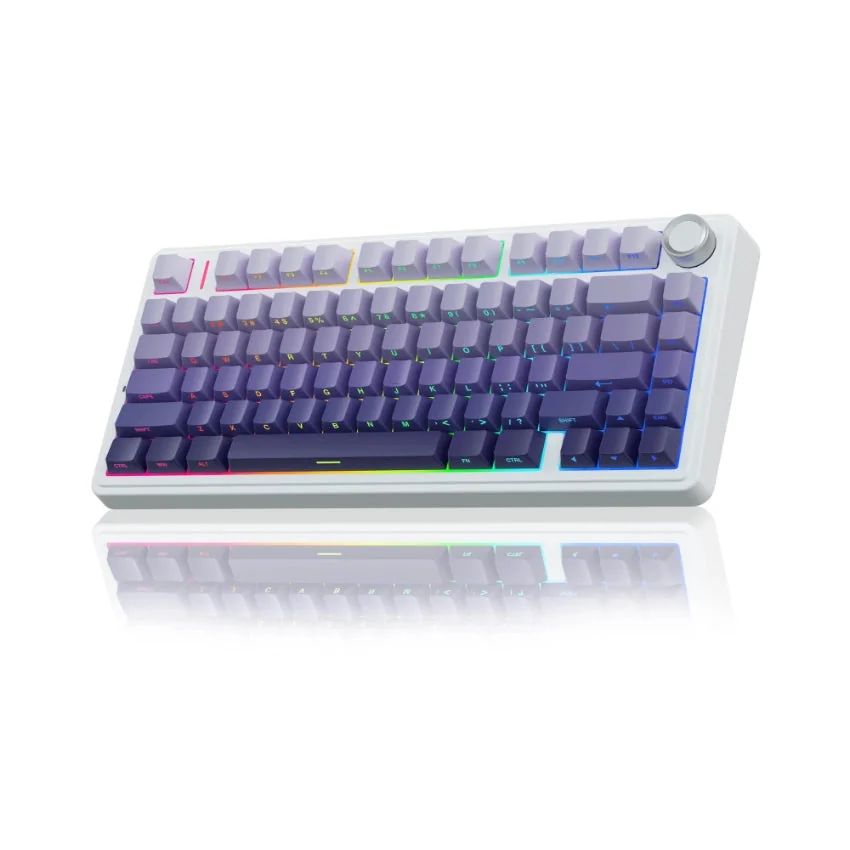
AULA F75 75%
By AULA · Mechanical Keyboards · Home & Workspace
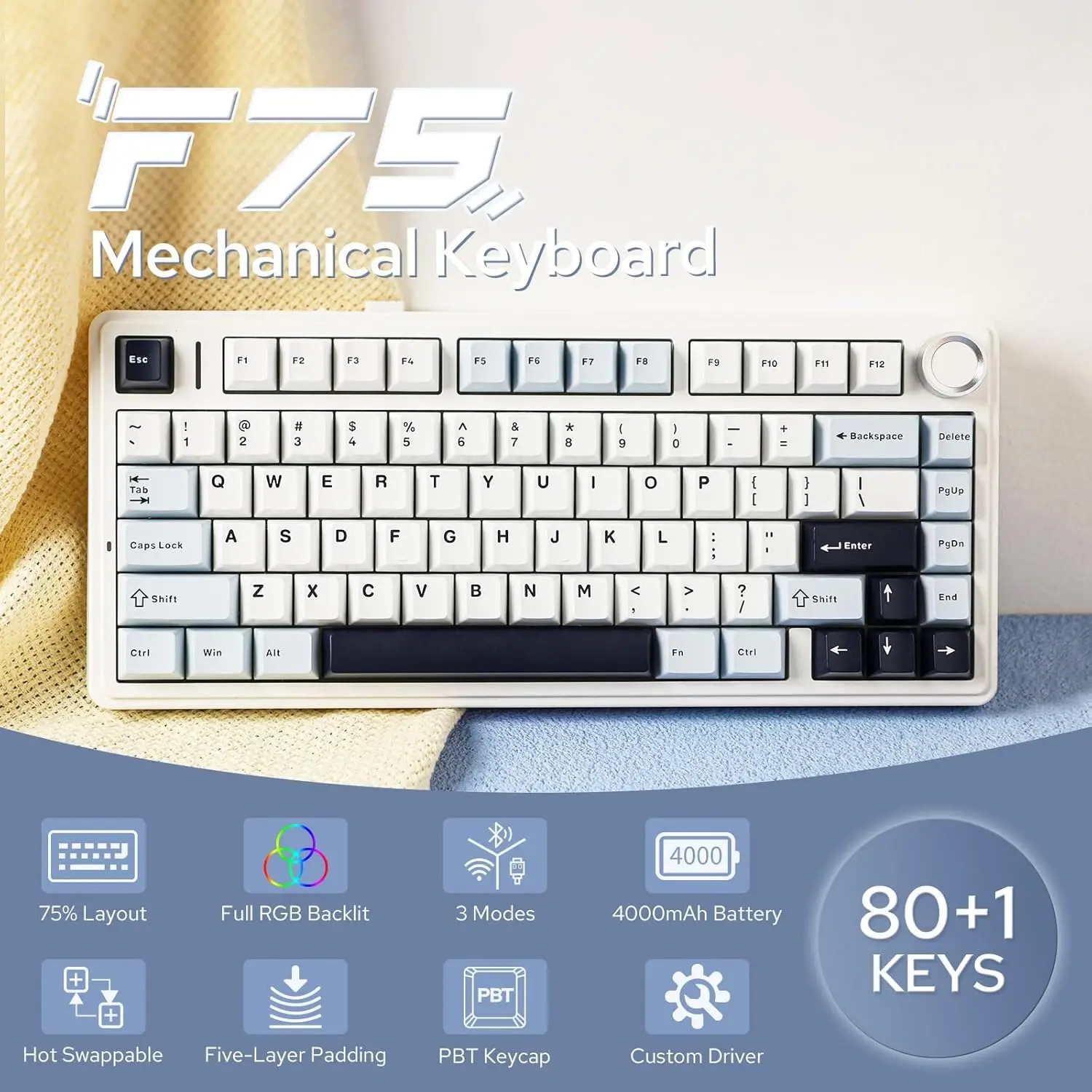
- 75% layout, 81 keys
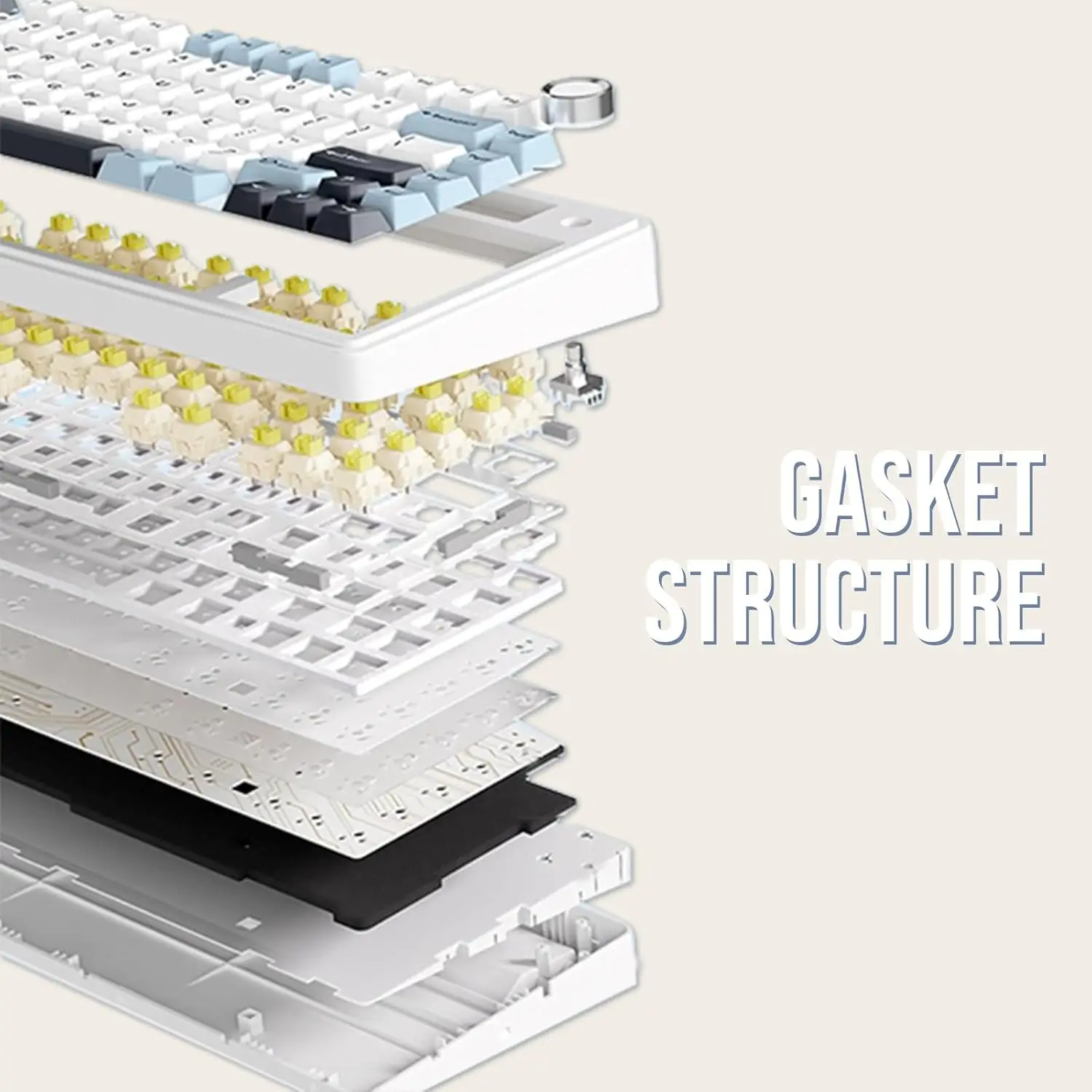
- Gasket mount with five-layer sound dampening
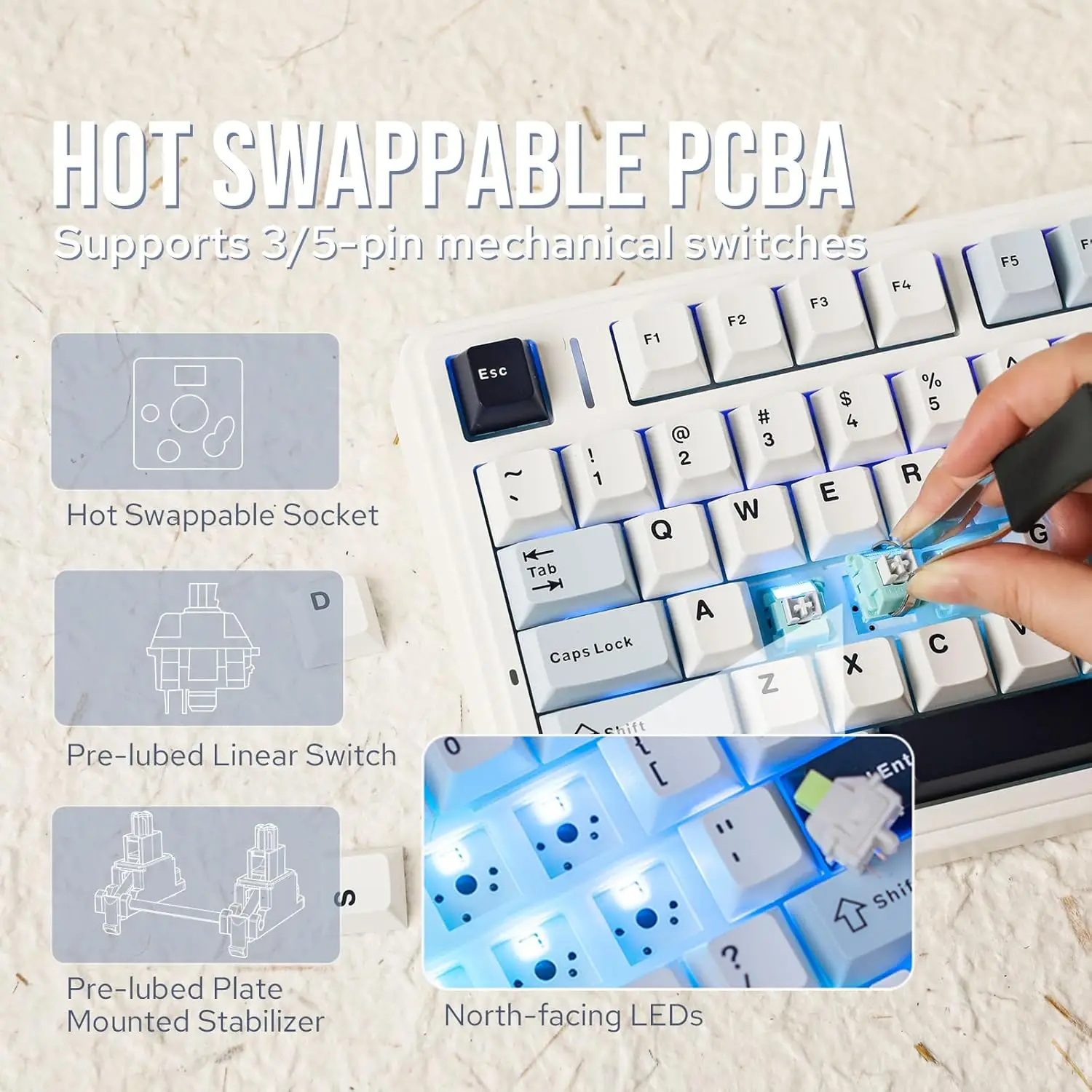
- Hot-swappable 3/5-pin switches, pre-lubed Reaper linear
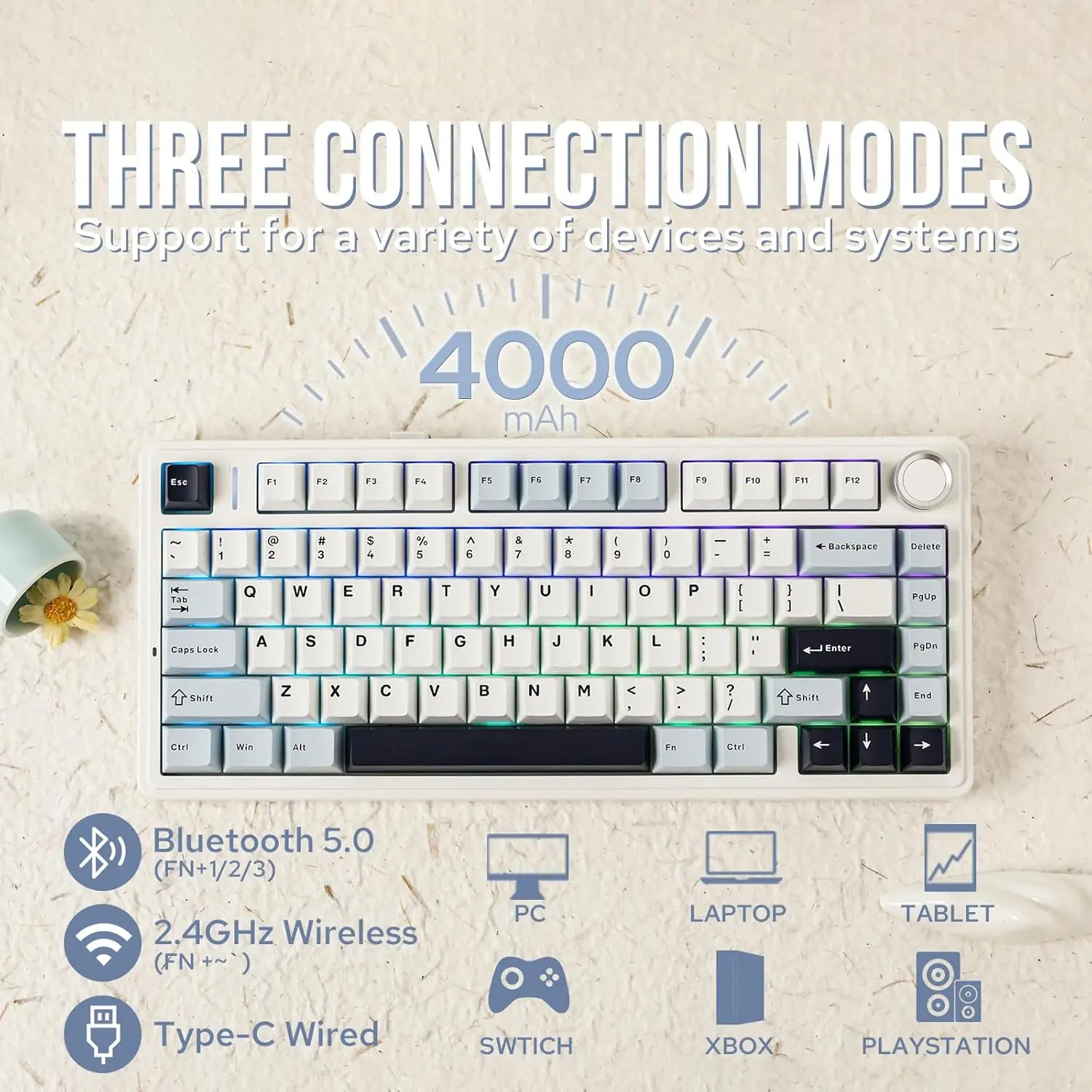
- Tri-mode: 2.4GHz, Bluetooth 5.0, USB-C wired
- PBT side-printed keycaps, south-facing RGB
Lowest price seen
$51.85
from $51.85 at AliExpress · Checked Oct 12, 2026
- AliExpress Haoxin Tech Store $51.85View at AliExpress
- AULAView at AULA
- eBay (used) eBay: used, open-box, refurbishedView at eBay (used)
- eBayView at eBay
- WalmartView at Walmart
- Best BuyView at Best Buy
- Micro CenterView at Micro Center
- TargetView at Target
- Kohl'sView at Kohl's
- EpomakerView at Epomaker
- AmazonView at Amazon
Prices are snapshots. Check the current price with the store.
Summary
A budget 75% gasket-mount, hot-swappable, tri-mode wireless mechanical keyboard that owners buy for its soft, thocky out-of-box sound. Check which variant you are ordering, because “F75” listings span 80-key and 81-key boards with different switches, and the configuration software is Windows-only.
Strengths
- Soft, well-damped gasket typing feel that reviewers and owners rate above its price.
- Hot-swap board: switches and keycaps change with the included puller, no soldering.
- Tri-mode connectivity and a 4000 mAh battery make it easy to move between desks and devices.
- Strong latency and 1000 Hz polling for a budget keyboard.
- Five layers of foam give a thocky stock sound that owners repeatedly praise.
- Spec density, not one headline number, is what makes it a frequent budget recommendation.
Weaknesses
- One specialist review unit shipped with severe key chatter, space-bar misfires and keycap clipping in all three connection modes.
- Software is clunky, Windows-only and offers limited remapping; the base and Pro lack QMK/VIA.
- Owners report inconsistent and dropped Bluetooth connectivity across multiple threads.
- Battery life with RGB on is about a week, with notable standby drain.
- The navigation column sits flush with the main block, and the plastic chassis feels cheap.
- The knob is not removable, can feel loose, and may only work while RGB is on.
Verified specifications
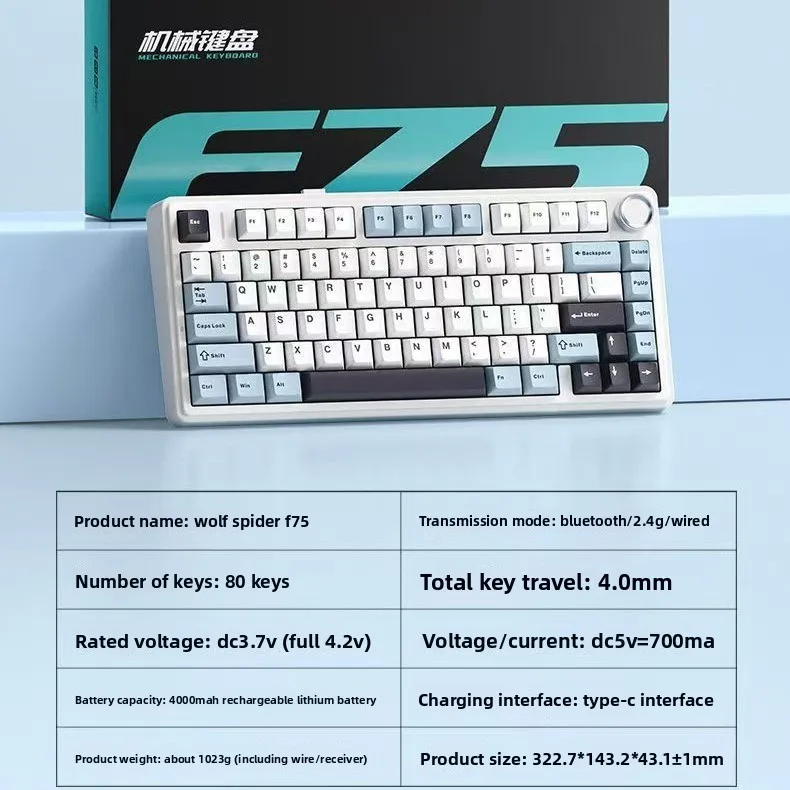
| Layout | 75% US ANSI QWERTY, 80 keys on the base F75 or 81 keys on the F75 Pro, plus a multi-function knob. |
|---|---|
| Case | ABS plastic with a gasket-mount structure and five-layer sound dampening, including a silicone bottom pad, PCB foams, a switch pad and a PET sheet. |
| Plate | plastic/PC with plate-mounted stabilizers. |
| Switches | hot-swappable 3-pin/5-pin, factory pre-lubed; the Pro variant ships LEOBOG Reaper linear switches. |
| Keycaps | double-shot PBT, side-printed on the Pro variant. |
| Connectivity | wired USB-C, a 2.4 GHz receiver stored in the frame, and Bluetooth 5.0 with pairing for up to 3 devices. |
| Polling rate | 1000 Hz wired and 2.4 GHz, about 125 Hz over Bluetooth. |
| Latency (LTT Labs) | 4.6 ms wired, 7.9 ms receiver, 19.0 ms Bluetooth. |
| Battery | 4000 mAh; the manufacturer claims up to a week with the backlight off. |
| RGB | per-key 16.8M colors, south-facing LEDs and 16 preset effects on the Pro. |
| Software | AULA F75 driver, Windows-only; no QMK/VIA on the base or Pro. |
| Dimensions | 322.7 × 143.2 × 43.1 mm; about 1023 g with the cable and receiver. |
| In the box | keyboard, 2.4 GHz receiver, braided USB-C cable, two extra switches, a 2-in-1 keycap and switch puller, and a user manual. |
| Warranty | 1 year for manufacturing defects, plus a 15-day no-reason return window at AULA’s US store. |
Full research notes and sources
Which model this is
The researched keyboard is the AULA F75 75% wireless mechanical keyboard. The owner-provided spec — 81 keys, pre-lubed LEOBOG Reaper linear switches, side-printed PBT keycaps and south-facing RGB — matches the F75 Pro variant sold in the US, so treat this page as the Pro unless your order page says otherwise. AULA’s US store lists the F75 Pro at 81 keys, while the base F75 and the F75 Ultra are 80-key boards; that key-count gap is the main thing to confirm before ordering. The Amazon listing carries ASIN B0CQ53BKWT.
Typing feel and sound
Owners buy this board for how it sounds. The gasket mount and five-layer foam stack give a soft, thocky tune straight out of the box, and Reddit threads call it “way better” than keyboards costing four times as much. A five-month owner reports day-one performance with no fade. Testers agree the feel is a high point: RTINGS rates the F75/F99 pair well for office and programming work and praises the latency, though it calls the plastic case cheap-feeling. The stock switch varies by listing — Reaper linear on the Pro, with TTC Crescent, Greywood V3 and others shipped under plain “F75” listings — so confirm the switch, not just the name.
Performance and connectivity
LTT Labs measured 4.6 ms wired, 7.9 ms receiver and 19.0 ms Bluetooth latency with 1000 Hz polling wired and wireless, and tags the board a “Budget Banger”. RTINGS extrapolated its F75 conclusions from testing the larger F99, so treat that verdict with caution. Wireless covers wired USB-C, a 2.4 GHz receiver that stores in the frame, and Bluetooth 5.0 with pairing for up to 3 devices. Owners report the Bluetooth link can drop or stutter, and the board sleeps after a minute of inactivity in wireless mode.
Software, repairs and upkeep
The AULA driver remaps keys, records macros and controls RGB, but it is Windows-only; macOS works as a host with no configuration software, and Mac modifier keycaps are not included on some variants. The board is hot-swappable, so switches and keycaps are owner-replaceable with the included puller, while the 4000 mAh battery has no documented replacement procedure. There are no consumables, so the only running cost is the keyboard itself. Warranty is 1 year for manufacturing defects per AULA India’s page, EPOMAKER lists a 1-year warranty with 30-day returns, and AULA’s US store offers 15-day no-reason returns as quality-control insurance.
Is it worth it?
Street pricing puts the F75 Pro broadly between $67.99 and $80.99: AULA’s US store lists the Pro at $76.49 (from $82.89) and the base F75 with Reaper switches at $80.99 (from $85.99), and Newegg ran the Pro as a limited-time offer at $67.99 (from $79.99) while listing other F75 variants at $104.99. Sypnotix recorded Pro retail at $94.90, and a July 2024 review cited about $69.99 as typical. Under $70 the spec density is hard to beat and the return window covers the quality-control risk; from $71 to $85 it is still a good buy; above $100 the plastic case and Windows-only software make other 75% boards worth a look.
Sources
Manufacturer:
- AULA F75 product page
- AULA F75 Ultra product page
- F75 / Max series collection — US Aula Keyboards
- AULA F75 user manual — device.report
- AULA F75 user manual — Manuals+
- AULA F75 warranty statement — AULA India
Independent reviews:
- AULA F99/F75 review — RTINGS
- Epomaker x Aula F75 compared — LTT Labs
- Aula F75 review — Gizmochina
- AULA F75 Pro review — Sypnotix
Owner reports:
- Thoughts on Aula F75? (r/keyboards)
- 5 months with AULA F75 (r/MechanicalKeyboards)
- Everyone is sleeping on the Aula F75 (r/BudgetKeebs)
- AULA F75 owner-review aggregate (RedditRecs)
Parts and stores: