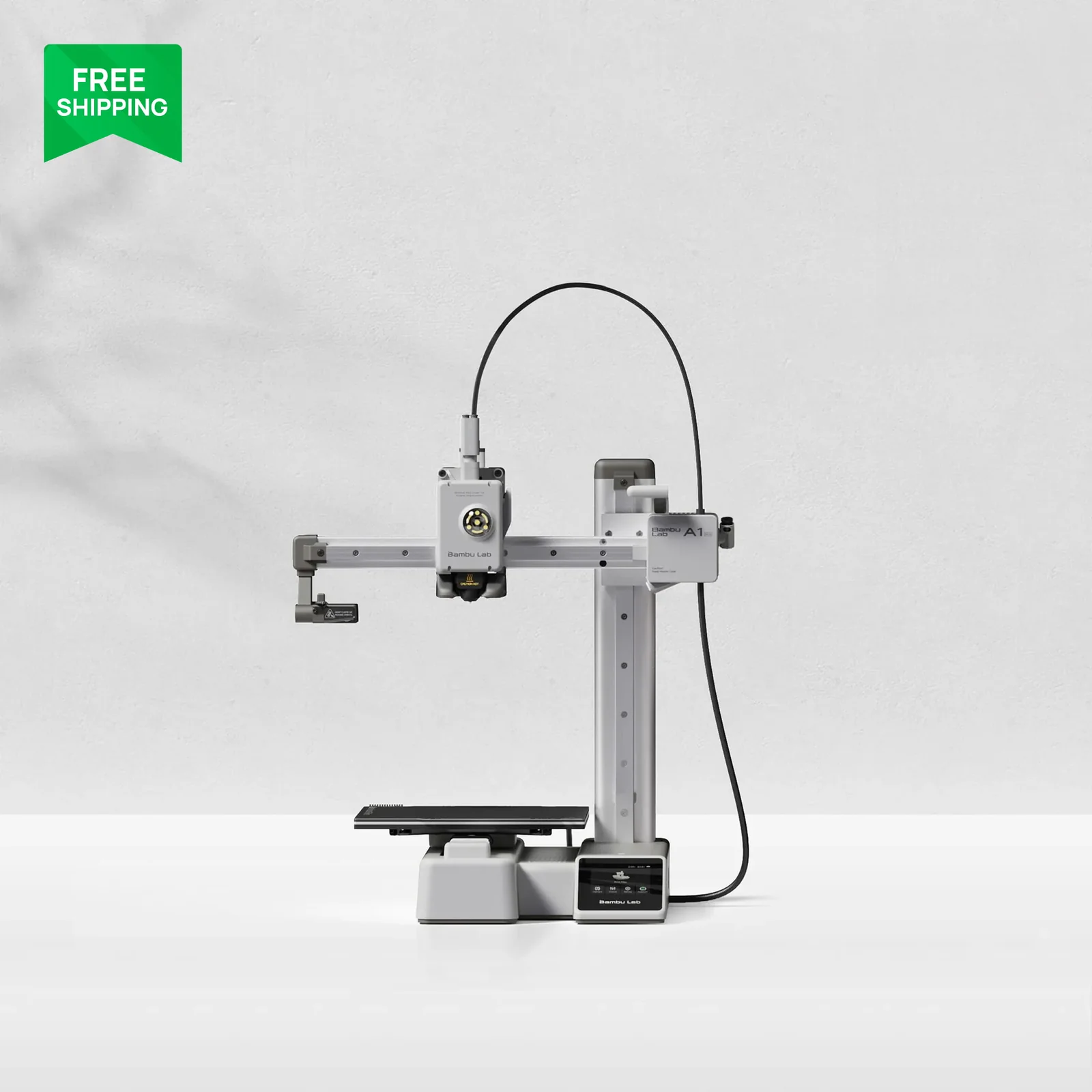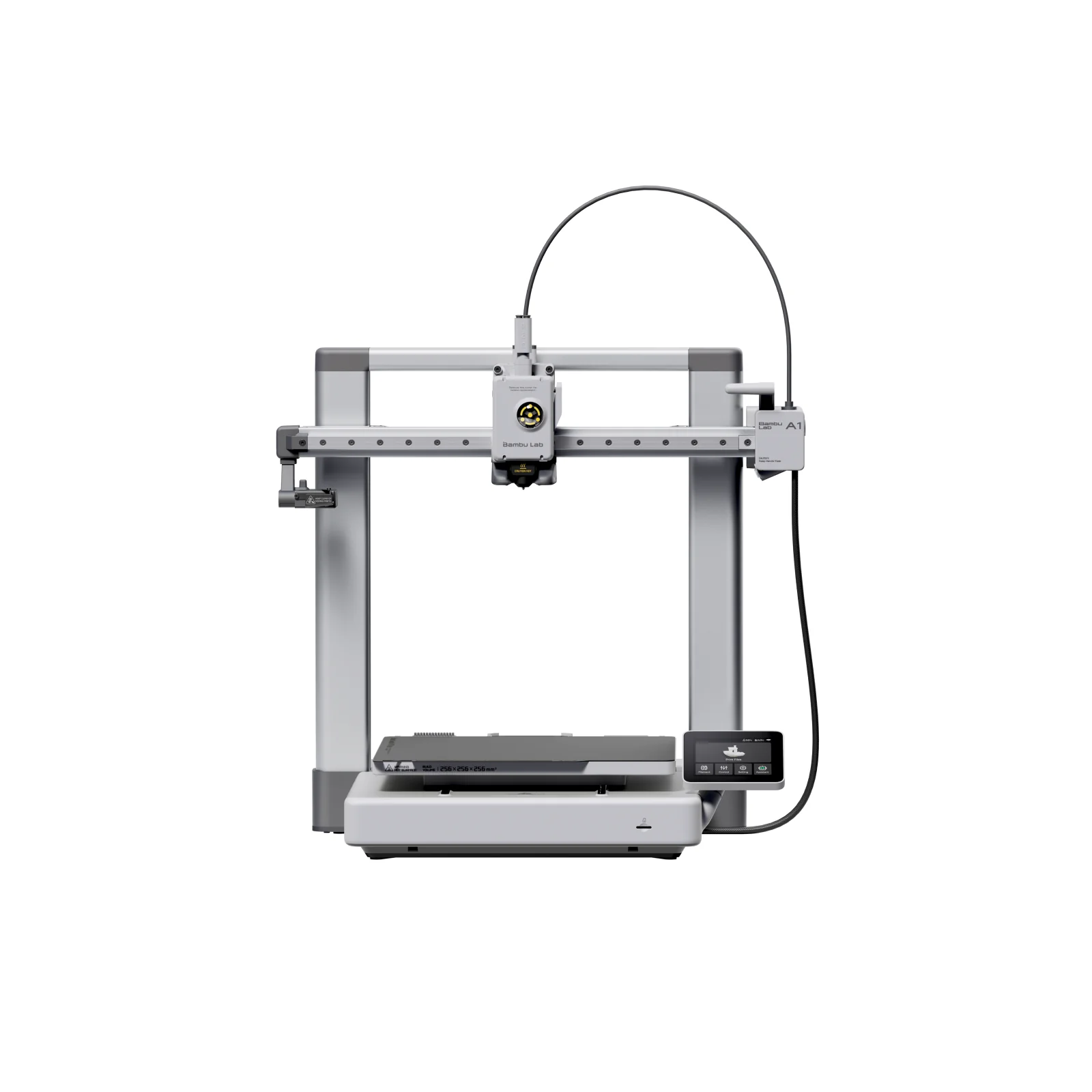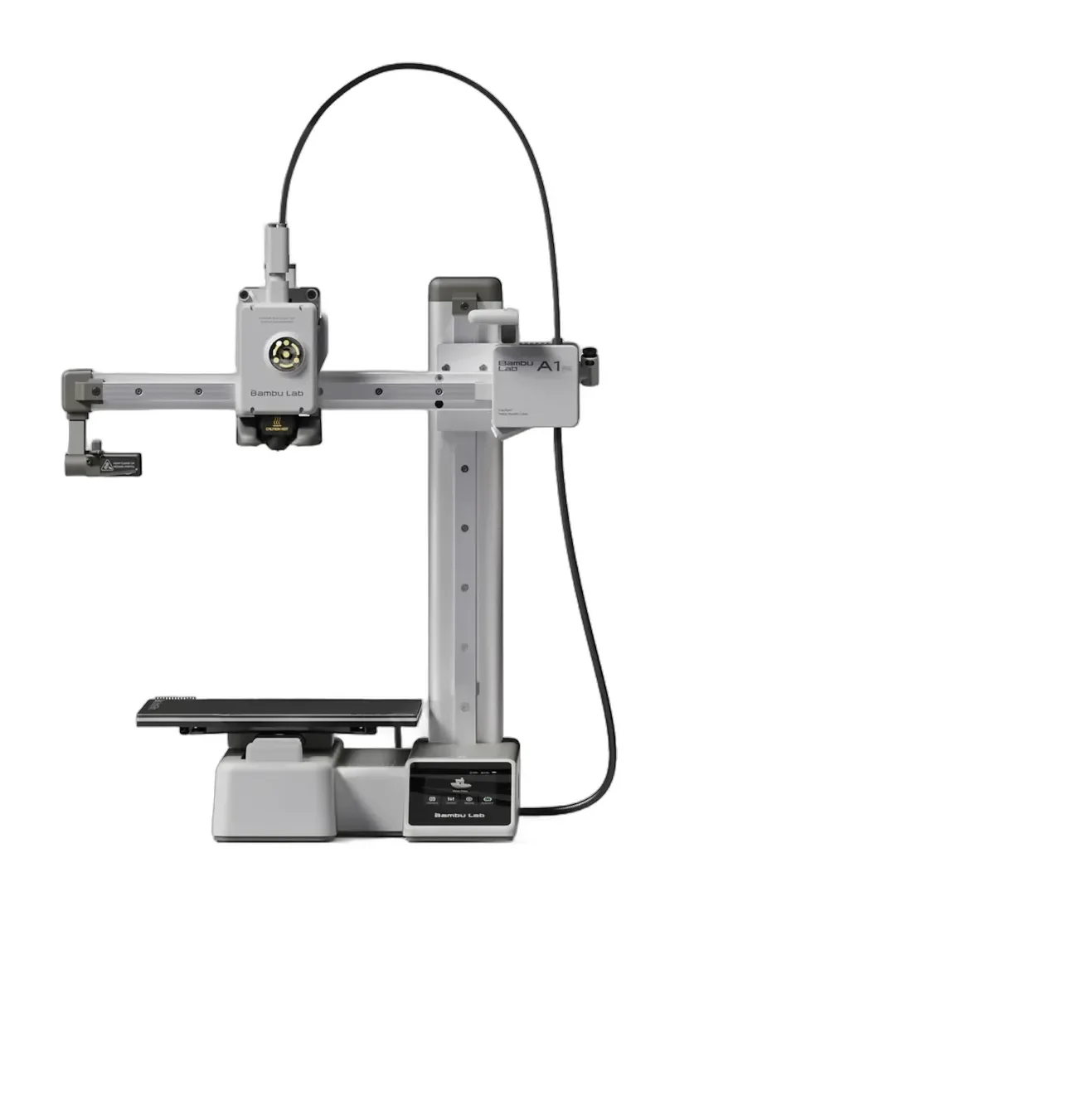
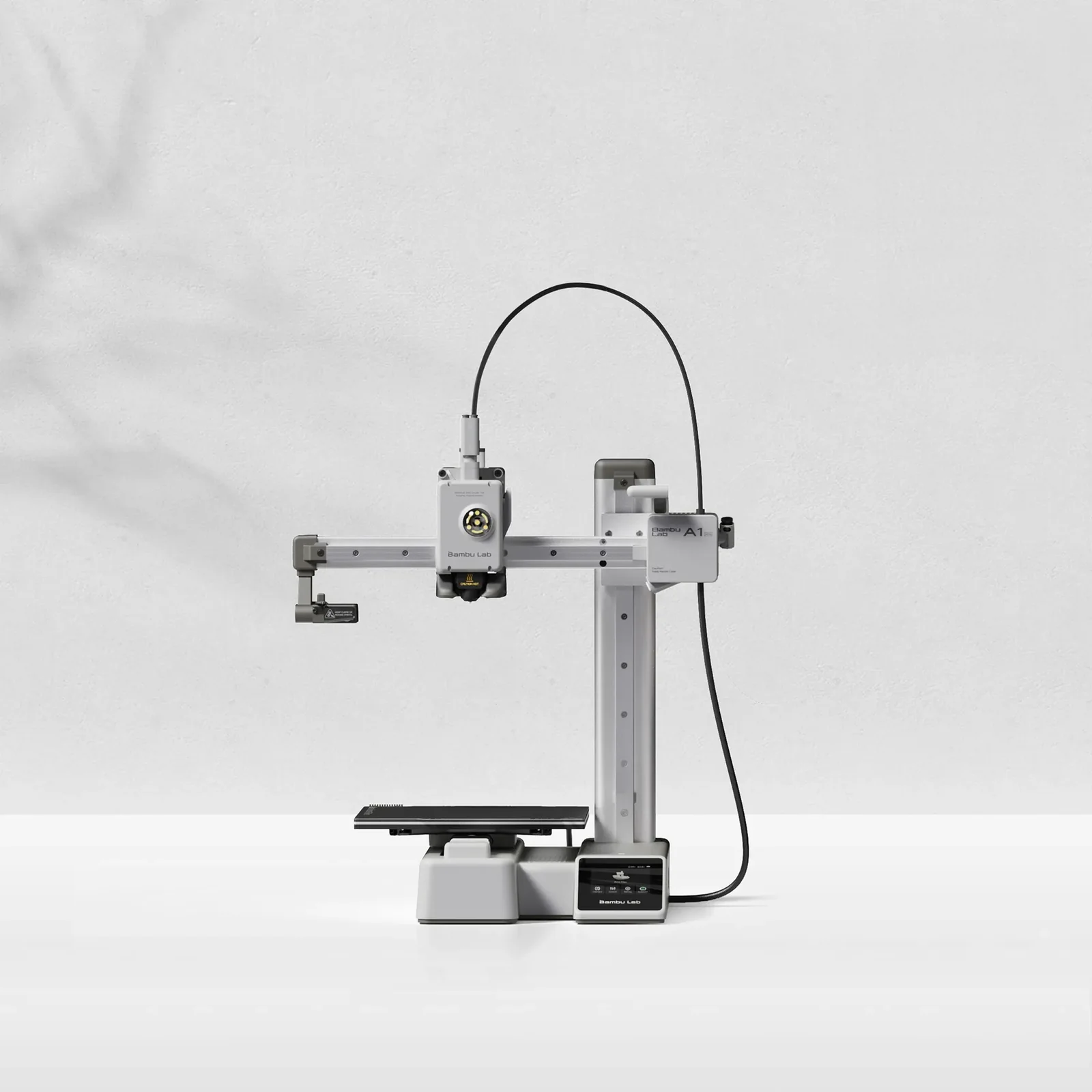
Bambu Lab A1 mini (LED Lamp Kit bundle)
By Bambu Lab · Budget 3D Printers · 3D Printing
- Compact open-frame FDM, fully automatic calibration
- 180 x 180 x 180 mm build volume
- Bundle includes the LED Lamp Kit for printed light projects
- Quiet operation, Bambu Handy app and MakerWorld integration
Lowest price seen
$219.00
from $219.00 at Bambu Lab (official US store) · Checked Sep 28, 2026
- Bambu Lab (official US store) $219.00View at Bambu Lab (official US store)
- NeweggView at Newegg
- eBayView at eBay
- Micro CenterView at Micro Center
- eBay (used) eBay: used, open-box, refurbishedView at eBay (used)
- AmazonView at Amazon
Prices are snapshots. Check the current price with the store.
Summary
A compact open-frame FDM printer with a 180 × 180 × 180 mm build volume, automatic calibration and a 300 °C hot end, aimed at beginners and anyone printing small objects. Check that your projects fit inside that small cube before buying, because it is the limit owners hit first.
Strengths
- Automatic calibration and little manual setup make it unusually easy for beginners.
- Tom’s Hardware found strong print quality for an entry-level machine.
- Owners describe it as their most-used printer.
- A direct-drive toolhead and 300 °C all-metal hot end cover everyday filaments.
- Filament runout, odometry and power-loss recovery help reduce failed prints.
- Small and light at 5.5 kg.
Weaknesses
- The 180 mm cube is a hard physical limit, the key compromise Tom’s Hardware flags.
- Bambu does not recommend ABS, ASA, PC, PA, PET or reinforced polymers.
- Reported faults include leveling errors, nozzle clogs, MicroSD failure and filament-feed interruptions.
- First-layer problems turn up on second-hand units, often traced to hot-end mounting or nozzle latching.
- The camera is low-frame-rate, so it is not for smooth live video.
Verified specifications
| Build volume | 180 × 180 × 180 mm. |
|---|---|
| Hot end | all-metal, up to 300 °C, with a stainless-steel 0.4 mm nozzle and optional 0.2/0.6/0.8 mm nozzles. |
| Build plate | textured PEI, up to 80 °C. |
| Maximum toolhead speed | 500 mm/s; maximum acceleration: 10,000 mm/s². |
| Materials | PLA, PETG, TPU and PVA are rated ideal; ABS, ASA, PC, PA, PET and carbon/glass-filled polymers are not recommended. |
| Camera | low-frame-rate, rated up to 1080p, mainly for monitoring and timelapse. |
| Sensors | filament runout, filament odometry, power-loss recovery and filament-tangle sensing. |
| Dimensions | about 347 × 315 × 365 mm; 5.5 kg. Tom’s Hardware rounds the depth to 314 mm. |
| Chassis | steel plus extruded aluminum. |
Full research notes and sources
Which model this is
The printer is the Bambu Lab A1 mini, an open-frame FDM machine. The LED Lamp Kit bundle changes the accessories rather than the hardware, so treat it as the same A1 mini. It is not the full-size A1, which has a larger build area.
Build volume and materials
The motion system is fast for the size, but the 180 × 180 × 180 mm build area is the limit that decides most purchases. Owner threads about choosing between the A1 mini and the larger A1 focus on build-volume regret rather than print quality. Material support is the other boundary: Bambu itself rates PLA, PETG, TPU and PVA as ideal while listing ABS, ASA, PC, PA, PET and carbon- or glass-filled polymers as not recommended, so the 300 °C hot end is not blanket support for engineering plastics.
Reliability and faults
Fault reports exist but do not support calling the model unreliable. One 2026 owner describes repeated print-head, heat-bed and Z-axis leveling errors and loss of manual control, pointing to a connection problem in that unit. Another thread lists clogs, MicroSD failure and feed interruptions across an A1 and A1 mini without establishing a model-wide rate. First-layer trouble on a second-hand A1 mini is discussed too, with commenters suggesting hot-end mounting or nozzle-latching checks. Treat these as troubleshooting signals, not a defect rate.
Is it worth it?
The A1 mini suits beginners, classrooms and experienced users whose projects fit inside 180 × 180 × 180 mm. Buyers expecting larger functional parts should compare the full-size A1, because owner discussion shows build volume is the main reason some later wish they had chosen the larger model. Anyone planning ABS, ASA, PC or PA work should pick a printer built around those materials, since Bambu marks them not recommended here.
Sources
Manufacturer:
Independent reviews:
Owner reports: