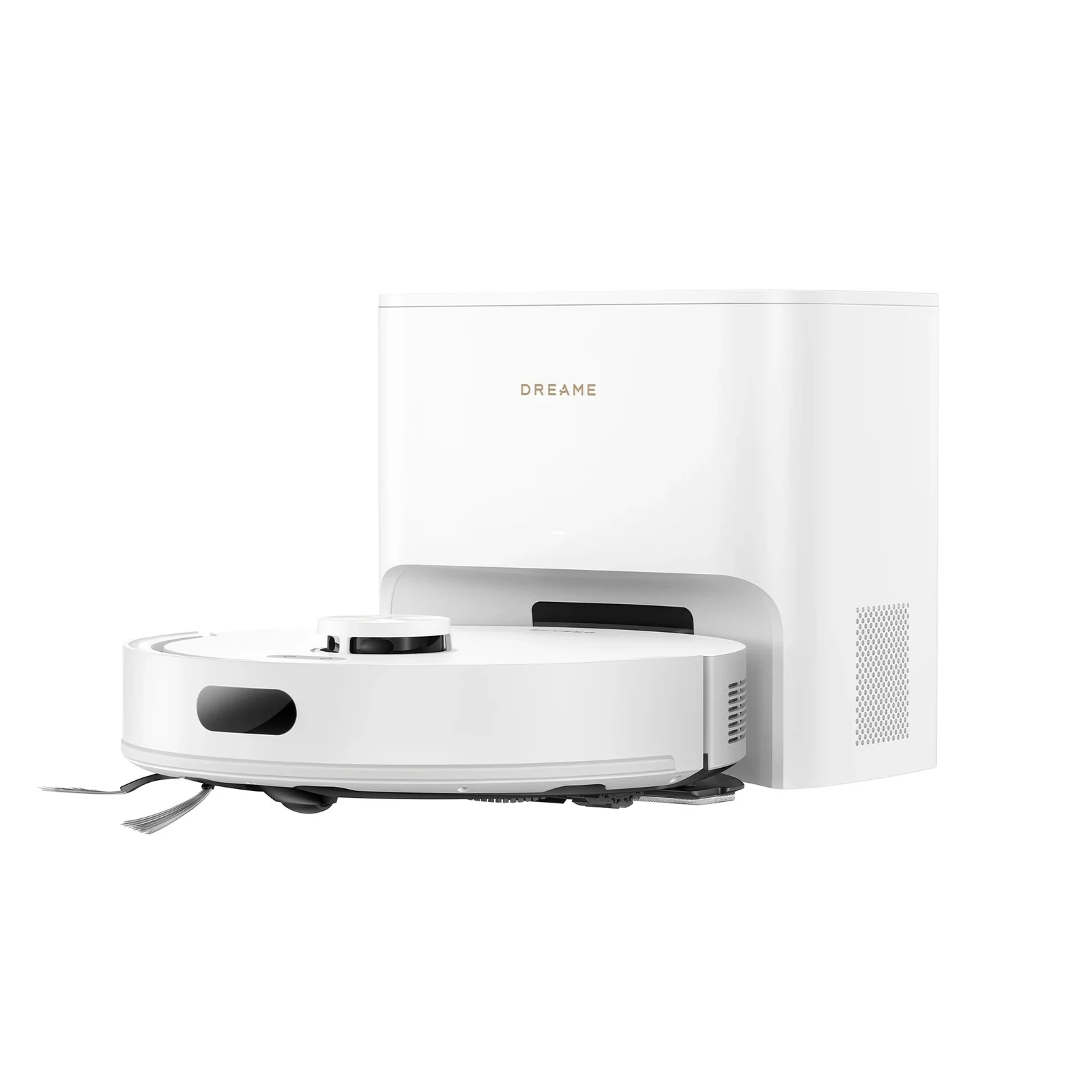
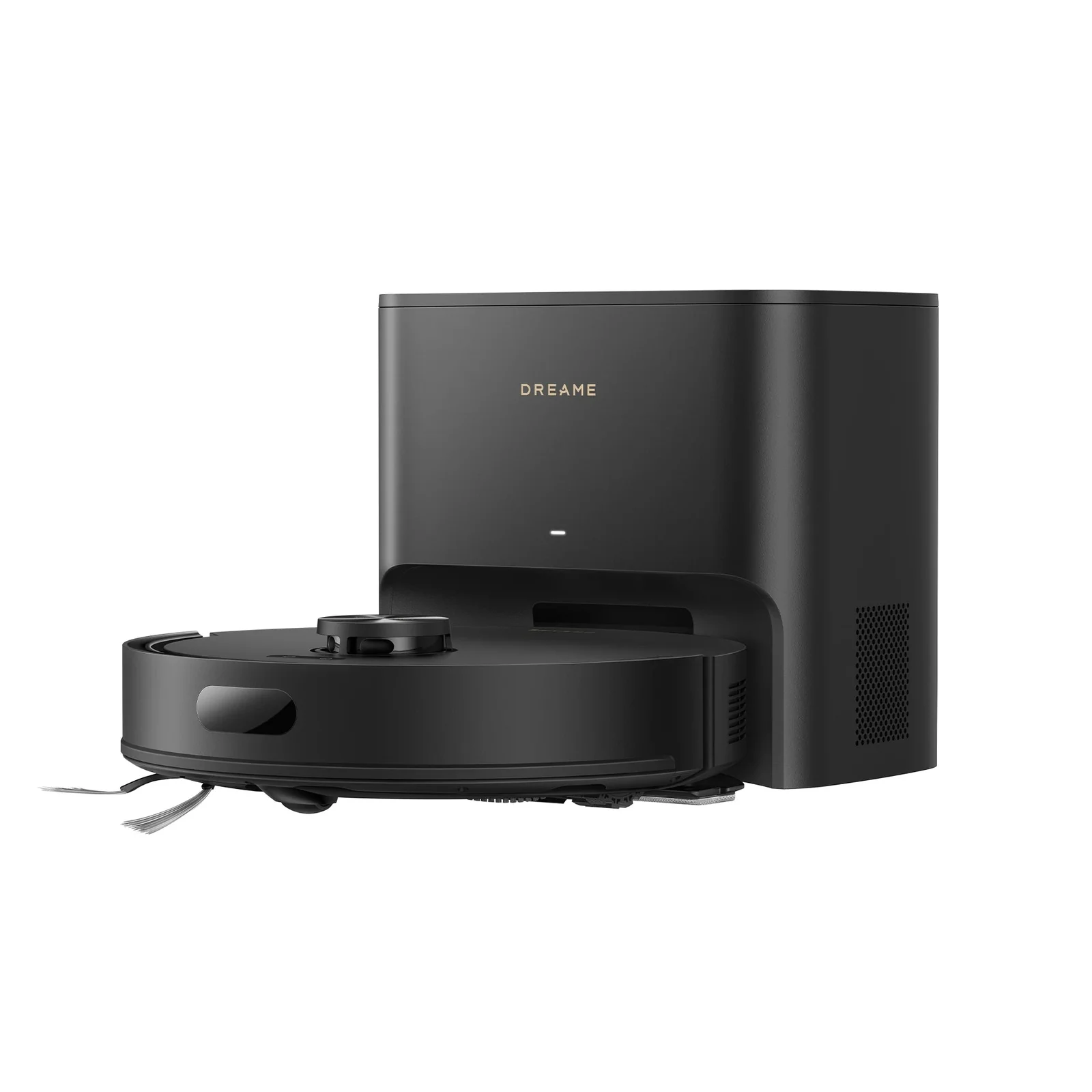
Dreametech dreame D20 Air Plus Robot Vacuum and Mop
By Dreametech · Robot Vacuums · Cleaning & Smart Home
- 20,000 Pa suction
- Vacuum and mop combo
- 542 ratings
Lowest price seen
$349.99
from $349.99 at Dreame (dreametech.com, US store) · Checked Sep 28, 2026
- Dreame (dreametech.com, US store) $349.99View at Dreame (dreametech.com, US store)
- eBayView at eBay
- NeweggView at Newegg
- eBay (used) eBay: used, open-box, refurbishedView at eBay (used)
- AmazonView at Amazon
Prices are snapshots. Check the current price with the store.
Summary
A mid-price LiDAR robot vacuum that vacuums well, empties its own 220 mL dust box into a 4 L bag, and mops as an extra rather than a feature. Check the price against the cheaper D20 Plus before you buy: at the $349.99 list price this machine costs more than the sibling that shares its navigation and has a lower suction rating.
Strengths
- Vacuuming is the strong half: PCWorld cleaned a downstairs in about 33 minutes with 77% of the battery left and collected greyhound hair plus tracked-in dirt and leaves.
- Straight parallel cleaning lines, and it slows near table legs instead of driving into them.
- It tucks under low furniture and gets close to walls and corners.
- The 4 L bag empties the 220 mL box, and the dock is small for its class.
- LiDAR mapping with four map levels, no-go zones and carpet areas set in the app.
- Setup is quick: snap on the side brush, plug in the dock, follow the app.
Weaknesses
- The dock does not wash the mop. No hot water, no washing, no drying, so the pad gets hand-washed and air-dried.
- Obstacle avoidance is a physical bumper, so assume cables, socks and toys get pushed rather than avoided.
- 20,000 Pa is a manufacturer lab figure, and no independent pickup, airflow or noise measurement of this model has been published.
- PCWorld found it consistently shoved a lightweight mat around the floor instead of cleaning it.
- It is louder than the reviewer expected beside a premium robot, though still quieter than an upright.
- It needs watching. No failure rate has been published for this exact model, and owner talk is a handful of pre-purchase threads.
Verified specifications
| Model code | RLF41GD. US SKU: 010204AA001258. |
|---|---|
| Maximum suction | 20,000 Pa, a manufacturer rating based on in-house lab data. |
| Battery | 3,200 mAh; the manual lists a 2.95 Ah lithium-ion pack, model C1251A6. |
| Runtime | up to 150 minutes / 140 m², measured by Dreame in vacuum mode on quiet suction. |
| Charging time | about 4.5 hours. Robot rated power: 14.4 V / 45 W. |
| Standby | up to 2 W networked, up to 0.5 W non-networked. |
| Suction levels in the app | Quiet, Standard, Intense, Max. |
| Navigation | LiDAR, with a custom 3D map, up to 4 map levels, zone divide, no-go zones, app-set carpet areas and app-set seam direction. |
| Obstacle avoidance | physical bumper only, with no object recognition. |
| Obstacle crossing height | 0.79 in (20 mm). |
| Main brush | rubber-bristle integrated brush with anti-tangle comb teeth; one detangling side brush. |
| Mop | flat pad, 32 water levels, 280 mL sensor-controlled water tank. |
| Dust box | 220 mL. Dock dust bag: 4 L. |
| Base station | model RCFD0301; 650 W dust-emptying power. |
| Dock | dust collection only. No mop washing, no hot water, no drying, no self-cleaning of the pad. |
| Noise | about 55 dB on Quiet, about 60 dB on Standard, about 65–70 dB on Max, all manufacturer-stated. |
| Dimensions | robot 12.8 in diameter (325 × 325 × 94.7 mm), 2.59 kg; base station 11.5 × 7.9 × 10.5 in (293 × 201 × 266.5 mm), 2.65 kg. |
| Voice control | third-party, with Alexa, Google Home, Siri, Alice and Marusia listed. |
| Colours | White, Black. |
| Warranty | 3 years on main components, 1 year on the battery and 1 month on consumables, with 30-day returns and free return by mail. |
| In the box | robot, base station, 2-in-1 water tank and dust box, mop pad, side brush, main brush, two dust bags, filter, mop pad holders, brush guard, quick start guide and printed manual. |
Full research notes and sources
Vacuuming, noise and mats
PCWorld’s review, published 6 August 2026, is the only full editorial test of this exact model that surfaced. Vacuuming is where it earns its price: that test finished a downstairs in about 33 minutes with 77% of the battery left and picked up greyhound hair along with dirt and leaf fragments tracked in from outside. The path is straight, parallel lines with no random bouncing, and the reviewer watched it slow near table legs rather than hit them. Setup was described as refreshingly simple, and the robot built its map while cleaning rather than needing a separate mapping run.
It runs louder than expected — quieter than an upright vacuum, but noticeably louder than the Roborock it was tested beside. Dreame’s own figures are about 55 dB on Quiet, about 60 dB on Standard and about 65–70 dB on Max, and nobody has put a meter on this machine. Its one irritating habit in that test was pushing a mat near a sliding glass door across the floor rather than driving over it. PCWorld’s judgement is that robot vacuums are not set-and-forget devices yet, and the reviewer still had to supervise it.
One caution about what you find when you search for reviews. That same PCWorld text is being republished almost word for word by a cluster of unrelated general-news sites, each with its own byline, currency and star rating, and those badge counts range from 488 to 4,567 for the identical article. None of it is independent evidence, and it makes this model look far better tested than it is.
Mopping, the dock and obstacle avoidance
The base station has one job: pulling dust out of the 220 mL box into the 4 L bag. There is no mop washing at the dock, no hot water and no drying. The mop is a flat pad on the same 2-in-1 tank and dust box module, with 32 water levels feeding a 280 mL sensor-controlled tank. You rinse that module between a mopping run and a vacuuming run, and you hand-wash and air-dry the pad. PCWorld lists the basic mopping system and the missing self-washing as two of its three cons, and writes that the machine does mop, sort of. The buyer who opened the model’s thread in r/Dreame_Tech had already checked and found the mopping not that great.
Whether it lifts the pad or routes around carpet is not answered anywhere. Dreame lists four carpet modes — Power Through, Glide Over, Clean On and Skip & Protect — without explaining what they do, the same owner thread asked about carpet detection and got no answer in the material retrieved, and PCWorld’s sensor list contains no mop-lift mechanism. Dreame also advises removing the mop pad before carpet cleaning for best results. Try it in your own hallway before you depend on it.
Obstacle detection is the other expectation to reset. Dreame’s own D20-series comparison says this model navigates with LiDAR but detects obstacles with a physical bumper, while the D20 Pro Plus in the same family uses single-laser 3D structured light. There is no object recognition here, so treat cable and sock avoidance as absent. Obstacle crossing height is 0.79 in (20 mm), the same on all three D20 models. An owner opening the Reddit thread asked specifically whether it spots toys and cables; nothing supports that it does.
Running costs, parts and service
Dust bags are the only exact-model consumable with a stable first-party US price. The OEM part is 20010100001018, sold as a three-pack for $10.79 on sale and $17.99 at the regular price, and Dreame recommends replacing a bag every 2 to 4 months. That works out to roughly 3 to 6 bags a year, or about $10.79 to $21.58 at the sale price and about $17.99 to $35.98 at the regular price. Filters, side brushes, the main brush and mop pads also have replacement intervals — 3 to 6 months for filters and side brushes, 6 to 12 months for the main brush and 1 to 3 months for the pad — but no US first-party prices for this model surfaced, so a full annual total cannot be stated. Dreame Spain lists an exact-model kit with one main brush, two side brushes, three filters, three mop pads and two bags for €44.99, which proves the kit exists but is not a US price. Dreame Canada lists the 4 L bag at C$13.79, which confirms the 4 L bag is the right part and not the 5 L bag used by the D20 Plus and D20 Pro Plus.
Electricity is small. At the EIA’s 2026 summer US residential forecast of 18.27 cents/kWh, continuous 2 W networked standby costs about $3.20 a year, and an hour of cleaning a day at the full 45 W rating adds about $3.00. Brief 650 W auto-empty cycles add little because they last seconds.
Service is the open question. No failure pattern has been established for this exact model. Dreame’s forum carries a “dust bag not installed” fault after months of use, traced to a loose metal clip that stopped the station recognizing the bag; the manual’s troubleshooting section also recognizes failures to auto-empty, water not dispensing, increased noise, charging trouble, route deviations and missed rooms. In the wider Dreame brand thread in r/Dreame_Tech, owners report both months-long repair waits and six trouble-free units, and some spring 2026 buyers said replacement parts were out of stock. That is about the brand, not this machine.
Is it worth it?
Buy on price, not on the suction number. Dreame’s US site lists the D20 Air Plus at $349.99 for both colours, while its own robot-vacuum category page was showing $242.99 against that list in the same October 2026 check, and PCWorld’s test machine cost $269.99 in August 2026.
At or below about $250 it is defensible value, and around $270 PCWorld called the price good. You get the most suction in the D20 line, LiDAR mapping, no-go zones, a carpet boost, a bagged dock and a three-year warranty, with one published test showing genuine vacuuming competence. At the $349.99 list price it stops making sense. Dreame’s own D20 Plus sits at $279.99 with the same LiDAR mapping and no-go zones, a larger 5 L bag, a 5,200 mAh battery and a 285-minute rating, and the D20 Pro Plus at $399.99 adds 3D structured-light obstacle avoidance and an extendable side brush. Paying more for more suction and less obstacle avoidance than the cheaper sibling is the deal to avoid. Contributors in r/RobotVacuums make the same point about Pascal ratings across this line: the number is the least discriminating spec on the sheet.
Which model this is
The D20 Air Plus is the bagged, 20,000 Pa member of Dreame’s D20 line, sold in White and Black under SKU 010204AA001258; the EU retail model code for the same machine is RLF41GD. The ASIN for this page is B0G5XVMVJN.
Do not confuse it with the D20 Plus or the D20 Pro Plus, which use a 5 L bag and different obstacle hardware, or with the cordless “Air” stick-vacuum line, which shares the word and nothing else. No hardware or firmware revision of this model was found. There is no downloadable manual: the printed booklet in the box is the only manual published, and the bag-change procedure is documented only in a generic support article for Dreame dust-collection stations.
Sources
Manufacturer:
- Dreame D20 Air Plus Robot Vacuum product page, specs and box contents (Dreame US)
- Dreame D20 Air Plus RLF41GD official user manual
- Dreame D20 series comparison: Air Plus vs Plus vs Pro Plus (Dreame US blog)
- Dreame US limited warranty policy
- Dreame US return and refund policy
- How to replace the dust bag (Dreame support)
- Robot vacuum accessories tagged for the D20 Air Plus (Dreame US)
- Dreame 4 L dust bags three-pack
- Dreame D20 Air Plus official accessory kit (Dreame Spain)
Independent reviews:
- Dreame D20 Air Plus review: a $270 self-emptying vacuum that delivers where it counts (PCWorld)
- Dreame RLF41GD D20 Air Plus model code and spec sheet (Electroline)
Parts:
Owner reports: