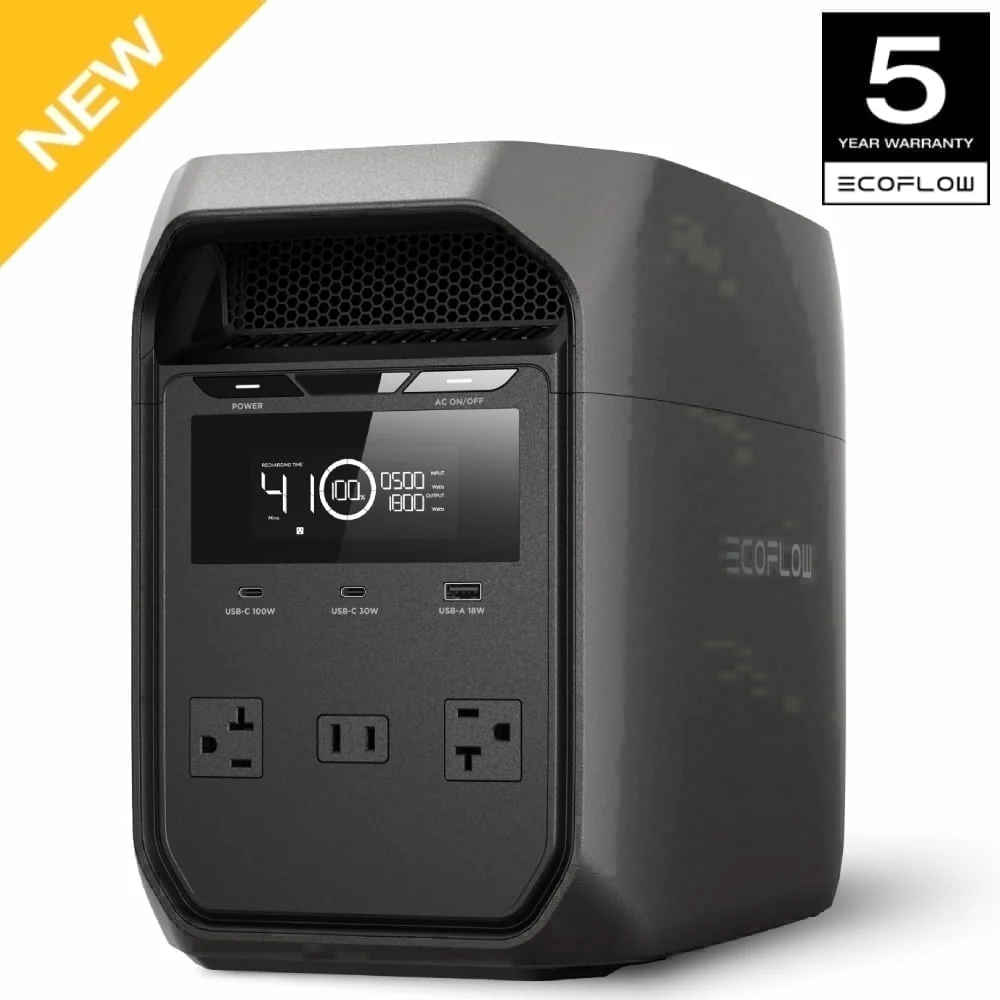
EcoFlow DELTA Pro 3 Portable Power Station
By EcoFlow · Portable Power Stations · Audio & Electronics
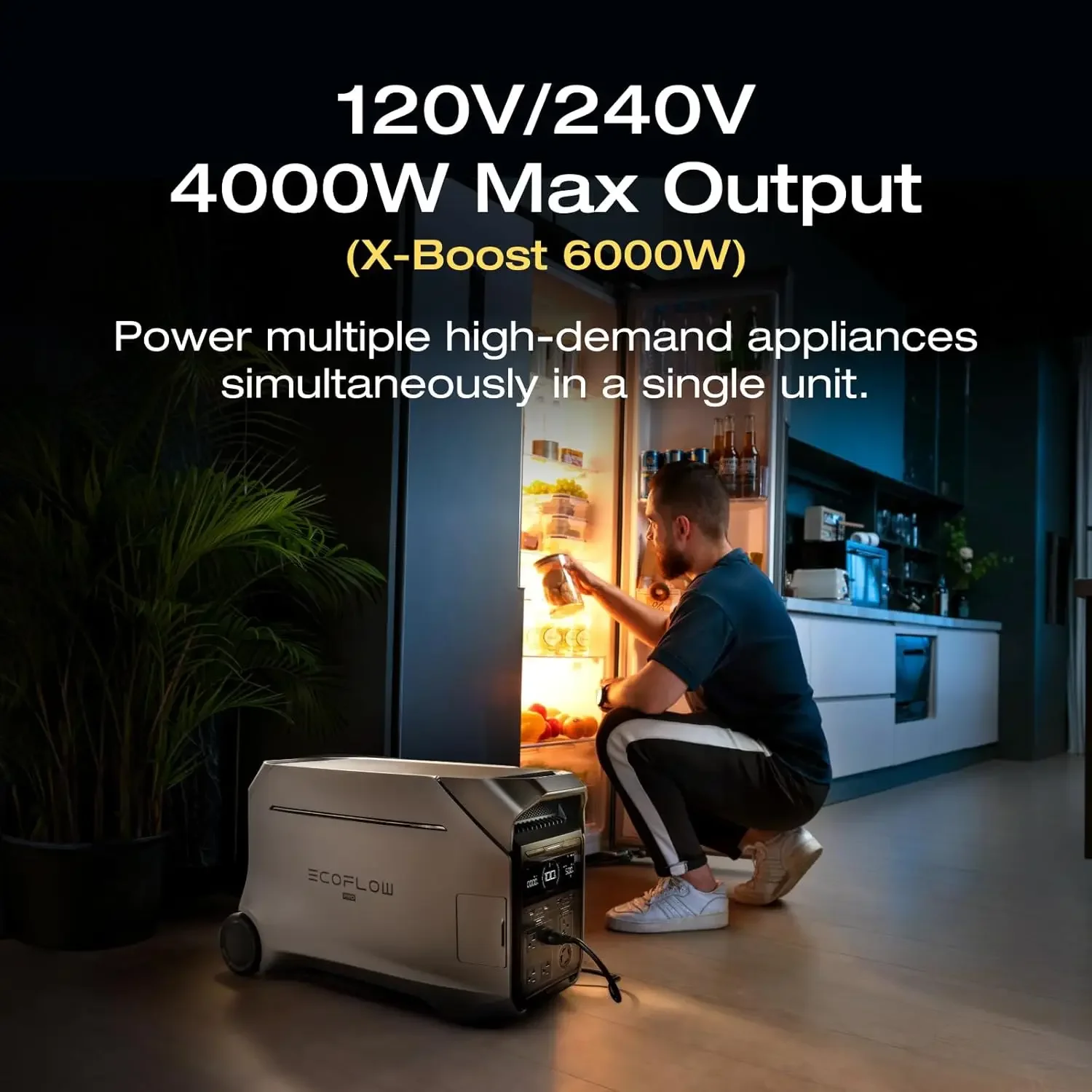
- 4,000W continuous AC output at 120V/240V in a single unit
- Stable 120/240V continuous output even during pass-through charging
- Retains 80% capacity after 4,000 cycles
Lowest price seen
$1,998.10
from $1,998.10 at AliExpress · Checked Oct 12, 2026
- AliExpress MomoGear Store $1,998.10View at AliExpress
- EcoFlowView at EcoFlow
- The Home DepotView at The Home Depot
- eBayView at eBay
- eBay (used) eBay: used, open-box, refurbishedView at eBay (used)
- AmazonView at Amazon
Prices are snapshots. Check the current price with the store.
Summary
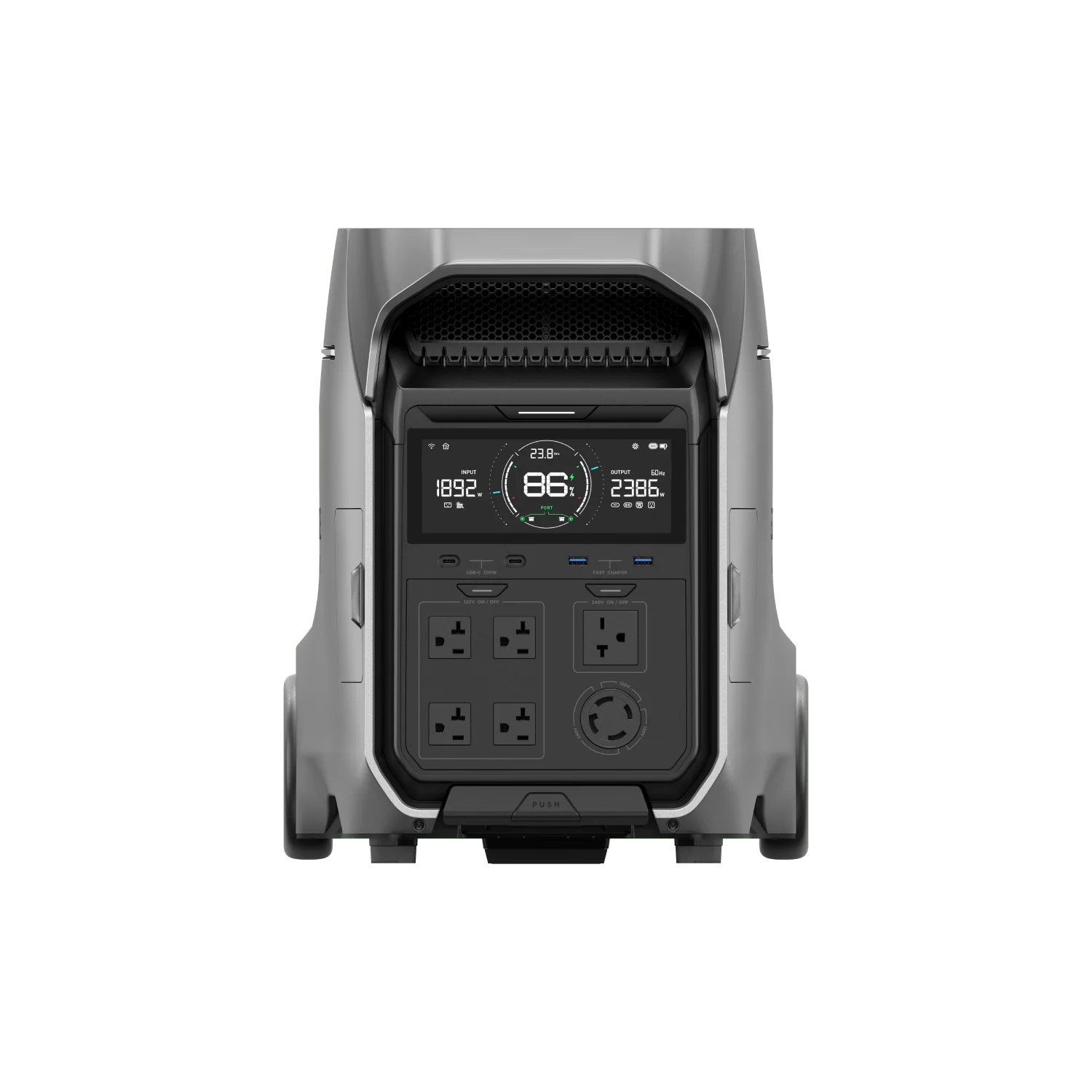
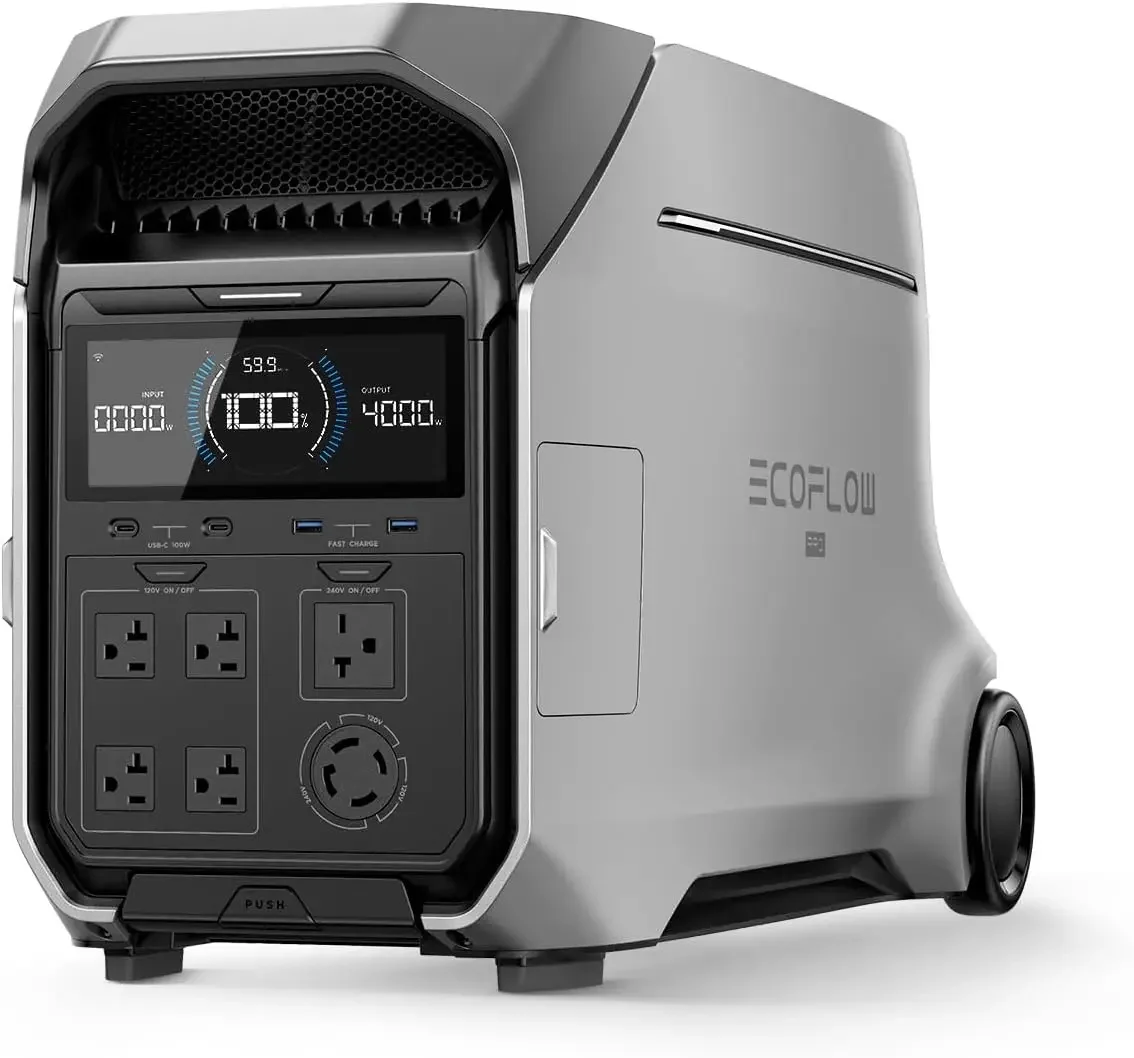
A 4,096 Wh battery power station that puts 4,000 W of continuous AC output and genuine 120 V or 240 V in one box, a combination most stations in this class skip. Check what voltage you actually need before you buy: the two outlet banks are switched, not parallel, so you cannot run a 120 V RV outlet and a 240 V tool at the same time.
Strengths
- GearLab measured 3,790 Wh usable from the rated 4,096 Wh, well above the 84–85% it found from a Jackery Explorer 2000 v2 and the DELTA 3 in the same test group.
- 240 V output in a single enclosure, so an electric stove or a 240 V tool runs without a second system.
- PCMag ran it for 2 h 45 min on a 1,500 W space heater and 9 h 50 min on a dehumidifier, ahead of its 120 V comparison unit on both.
- GearLab used it as primary backup for six months, running a fridge, TV and space heater together through several overnight outages.
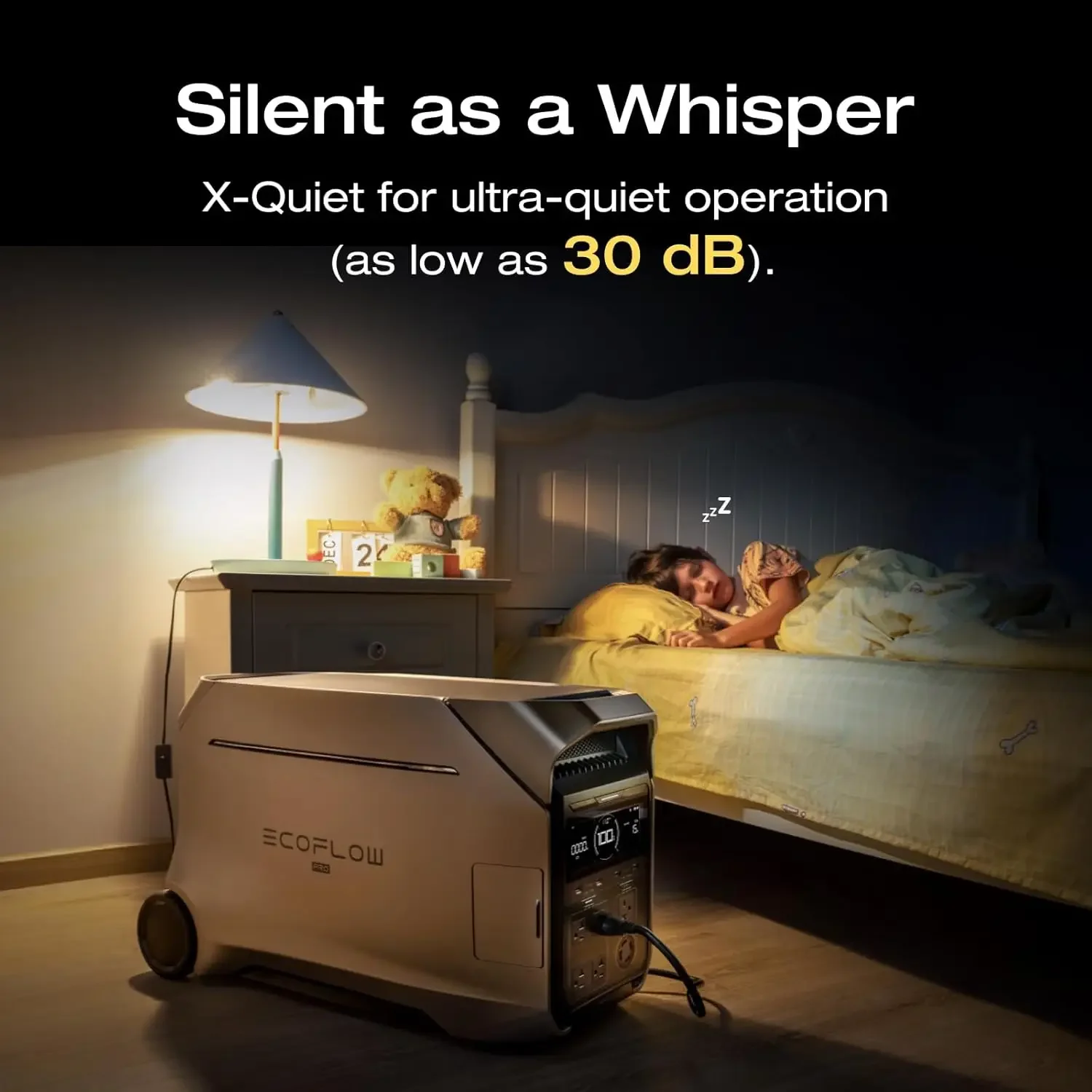
- Quiet enough to sleep next to: GearLab ran CPAP machines and heaters at night without noticing the fan.
- GearLab calls the display one of the largest on any power station, and five different AC plug types mean nothing gets left out.
Weaknesses
- 120 V and 240 V cannot run at the same time. Pressing one voltage button switches the other bank off.
- It weighs 114 lb, which GearLab calls a two-person lift, and the wheels and telescoping handle only help on flat ground.
- The 6,000 W X-Boost number is short-duration overload tolerance, not a second continuous rating.
- Expansion is expensive: $1,814 for one 4,096 Wh Smart Extra Battery at EcoFlow direct (2026-10-05), roughly $440/Wh.
- Owners running multiple units report error codes, over-temperature faults and charge-limit settings that would not hold.
- Nobody has published a failure rate, so the size of that problem is unknown.
Verified specifications
| Capacity | 4,096 Wh, LFP (lithium iron phosphate), described by EcoFlow as EV-grade. |
|---|---|
| Measured capacity | GearLab pulled 3,790 Wh out of the rated 4,096 Wh, about 93% usable. |
| AC output | 4,000 W continuous, 120/240 V ~16.7 A, 60 Hz; 8,000 W surge. |
| X-Boost | up to 6,000 W, and only for short bursts above the rated output. |
| 120 V outlets | 4 × NEMA 5-20R 20 A, plus 1 × NEMA TT-30R 30 A RV outlet on the left side panel. |
| 240 V outlets | 1 × NEMA 6-20R 16.7 A on the front, plus 1 × NEMA L14-30R 16.7 A that shares the 120/240 V switching. |
| USB-C | 2 ports, 100 W each, 200 W total. |
| USB-A | 2 ports, 18 W each, 36 W total. |
| 12 V DC car output | 12.6 V, 30 A, 378 W total. |
| Extra low-voltage ports | 1 × DC5521 at 5 A, 1 × Anderson at 30 A. |
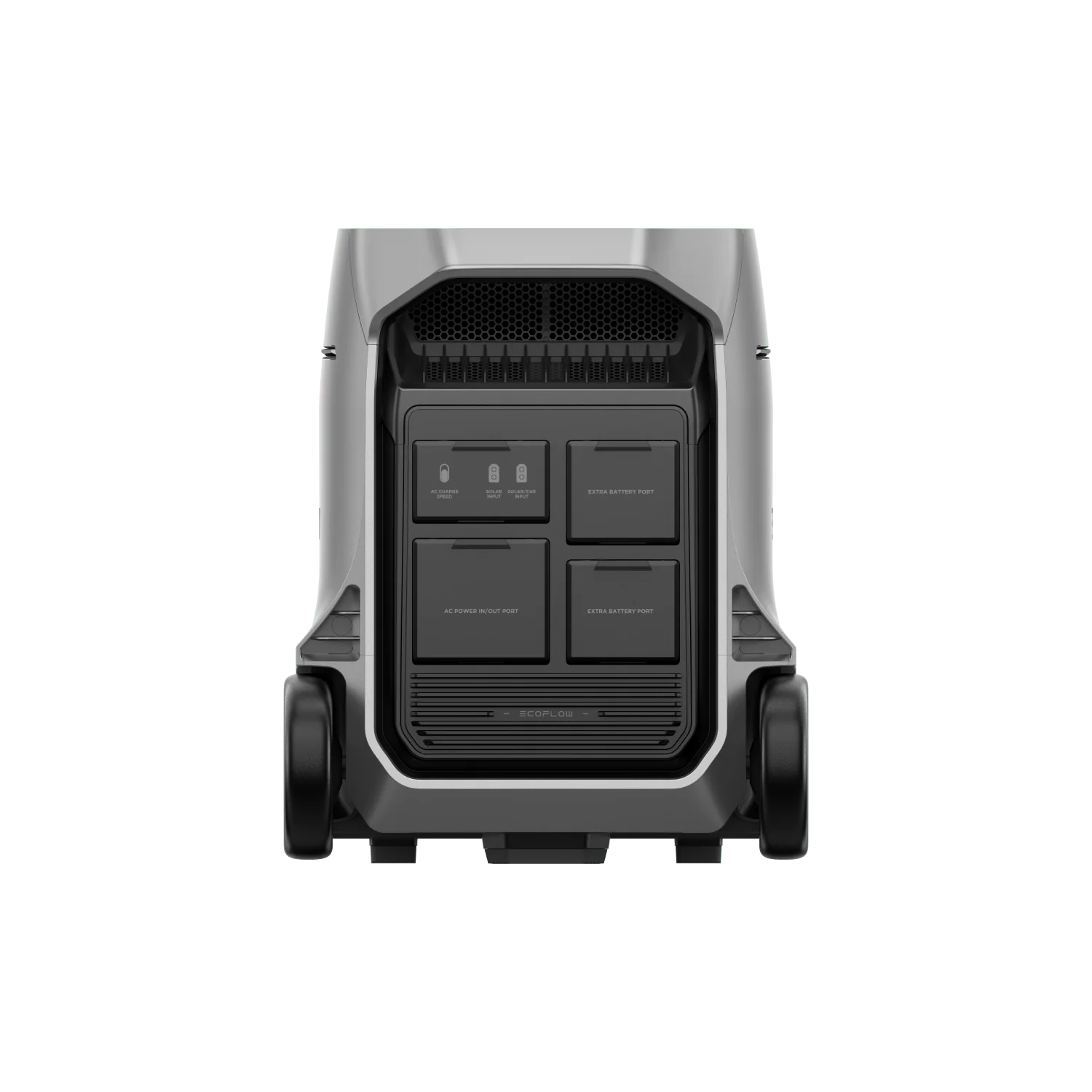
| Solar input | 2,600 W total across two ports — 1,600 W on the high-voltage PV input, 1,000 W on the low-voltage one. |
| Grid charging | 100–240 V ~15 A, or bypass mode at 100–120 V 12 A continuous for up to 3 hours. |
| UPS | 10 ms switchover. |
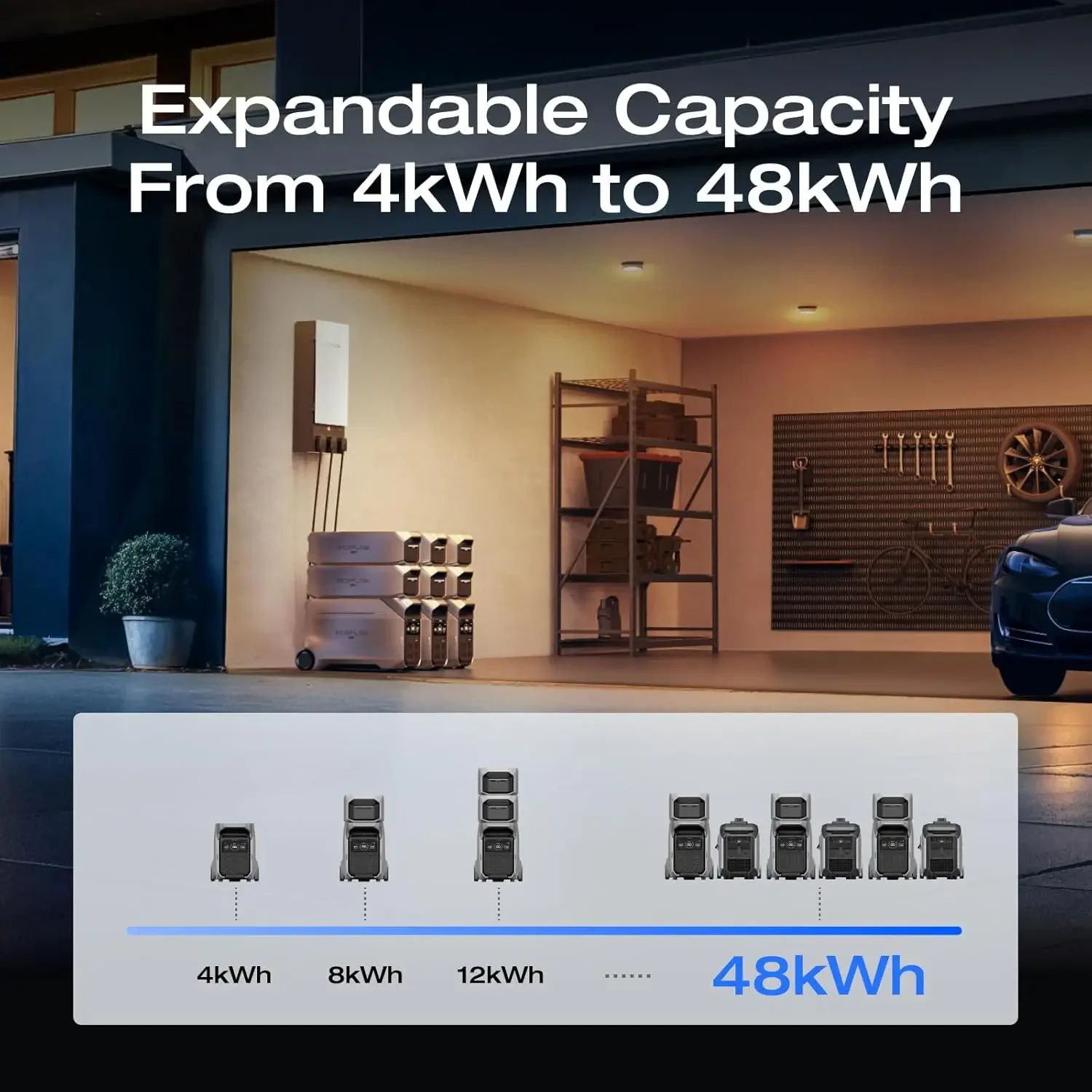
| Expansion | one unit plus two Smart Extra Batteries reaches 12 kWh. |
| Connectivity | Wi-Fi 2.4 GHz, Bluetooth, CAN. |
| Cycle life | 4,000 cycles to 80% capacity, rated at 0.5C charge and 0.5C discharge at 25 °C (77 °F). |
| Battery protection | IP65, UL-certified 5VA fireproof shell, Cell-to-Chassis construction, X-Guard BMS watching 40 safety indicators. |
| Dimensions | 27.28 × 13.43 × 16.14 in (693 × 341 × 410 mm). |
| Weight | 113.5 lb (51.5 kg) from the manufacturer; GearLab weighed it at 114.1 lb. |
| In the box | power station, AC charging cable, two grip protectors, quick start guide, safety guide, warranty card. |
Full research notes and sources
What the lab tests measured
GearLab pulled 3,790 Wh out of the rated 4,096 Wh and called the result well above average for the category. In the same test group they measured 84% from a Jackery Explorer 2000 v2, 80% from an Anker Solix C1000 Gen 2 and 85% from the EcoFlow DELTA 3, so the 93% figure is a real edge rather than a rounding difference.
Charging is where the numbers split. GearLab measured 1,293 Wh/hr and 3.2 hours to full, and states plainly that their test never reached the advertised 1,800 W of AC charging input. PCMag measured 2 h 35 min for a full recharge. EcoFlow’s marketing figure of 80% in 50 minutes needs the 4,000 W X-Stream input path rather than a 15 A wall outlet, so plan on roughly three hours from a normal outlet.
On real loads, PCMag’s three discharge tests are the clearest numbers to plan around: 2 h 45 min on a 1,500 W space heater on its highest setting, 9 h 50 min on a Midea Cube dehumidifier, and a little over 37 hours on a 40 W lamp plus a Dreo air circulator. Solar is slower: four EcoFlow 500 W panels in a backyard with about five hours of direct sun took a little over seven hours to reach 100%.
120 V and 240 V cannot run together
This is the point most sellers bury. Pressing the 120 V button powers the four 20 A outlets and the 30 A TT-30 RV outlet and switches the 240 V outlets off; pressing the 240 V button does the reverse. EcoFlow states it directly.
If you are planning an RV with a 240 V appliance, one unit is not enough. GearLab liked being able to run an electric stove off the 240 V outlet, which no 120 V-only station in this capacity class can do.
Two numbers to demote
X-Boost’s 6,000 W is not a second continuous rating. PCMag’s app walkthrough describes it as powering devices beyond rated output “for a short amount of time,” and EcoFlow’s own explanation of the feature on the earlier DELTA Pro frames it as a safety net for a temporary surge. The “runs a 3-ton central AC” claim comes with EcoFlow’s own footnote that it was tested in a laboratory with a central AC soft starter.
The “up to 48 kWh expandable” headline also needs its footnote: that is three inverters, three extra batteries, three Smart Generators 4000 and a Smart Home Panel 2, all sold separately. One unit with two batteries tops out at 12 kWh.
Native grid charging on the US unit is 120 V Level 1 only. The 4,000 W Level 2 path needs the separately sold EV X-Stream Adapter, priced at $99 by PCMag. Solar panels are not included either.
Carrying it around
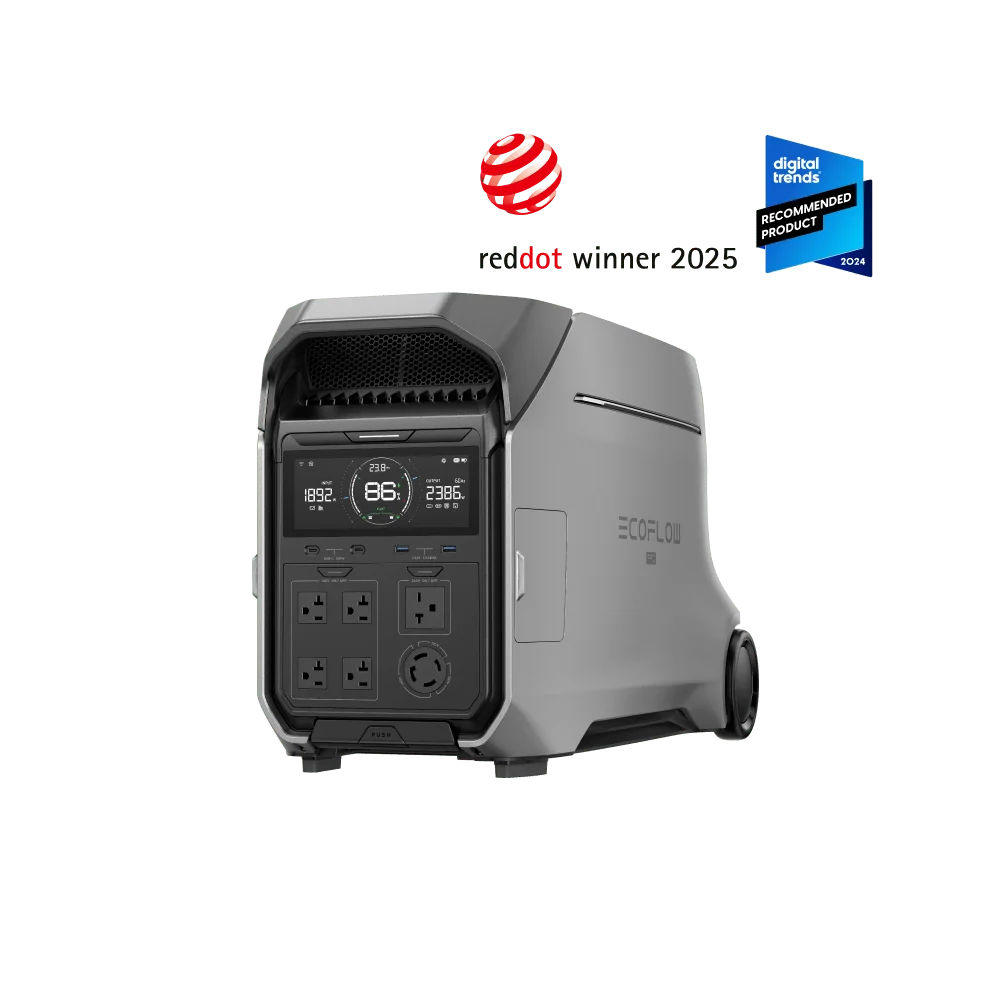
About 114 lb and 27 × 13 × 16 in, with a pair of built-in 5-inch rear wheels and a telescoping front handle. GearLab scored portability 4.0 out of 10 and recommends leaving it in a fixed location with a Transfer Switch Kit. GearLab also found the option menus more complicated than Jackery’s simpler approach.
What owners report
Owner evidence here is thin on praise and thick on problems, and the problems cluster in firmware and battery management rather than the hardware.
The clearest thread is a three-unit owner in r/Ecoflow_community who traced random errors to the “Charge & discharge order” setting. In Compatibility mode EcoFlow picks the charge order by battery voltage; in Priority mode the main battery charges first while extra batteries discharge until 5%. That owner saw an over-temperature error while recharging on Compatibility mode and repeated overload-protection errors on Priority mode that stopped after switching back. The reporter also notes the overload error was thrown by the Smart Home Panel 2 rather than the DELTA Pro 3.
Separate owners report Error 71 six months into ownership along with an RMA process they describe as a problem, and charge limits set to 20%/80% that would not hold on the last cycle. An EDN writeup on other EcoFlow models shows the same shape: a DELTA 3 Plus stack throwing Error 726 whenever a Smart Extra Battery was connected, and going away only after EcoFlow manually pushed a firmware downgrade, with a suspected failing IoT module behind it.
None of this is a failure rate, and several of the loudest voices own three units each, which is a more complex setup than a single-unit buyer. Treat firmware currency and which extra battery generation you mix as real ownership questions rather than footnotes.
Warranty and battery life
Five years is the well-supported figure: EcoFlow Ireland’s spec block and GearLab’s specification table both state it, and GearLab lists 5 years for two competitors while listing 2 years for the older DELTA Pro. The EcoFlow US spec block states no term at all, though a warranty card ships in the box. Confirm the US terms with EcoFlow before you buy, because the term matters a lot on a purchase this size.
The 4,000-cycle rating is a manufacturer claim with its test condition attached, not a measurement: no independent lab has put this exact model through cycle testing, and GearLab repeats the figure as a spec. The X-Guard BMS watches 40 safety indicators from the app, and BMS reset or recalibration is the first move in most of the community troubleshooting advice, so expect to learn that procedure rather than a repair manual.
Is it worth it?
The case holds if you genuinely need 240 V from one box. The 93% measured usable capacity and the split-phase output are the two reasons the price makes sense.
Expansion economics are where it gets uncomfortable. PCMag and GearLab both carry a $3,699 list figure, against a $2,799 promotion on EcoFlow’s own US storefront (2026-10-05). A single Smart Extra Battery was $1,814 at EcoFlow direct on the same date, or the $2,599 PCMag cited, so you are paying well above what a second mid-size 120 V station costs per watt-hour. PCMag’s own comparison points are the $1,599.99 Ugreen PowerRoam 2200 and the $999 DJI Power 1000; if all your loads are 120 V and under 2,000 W, look at those first.
Which model this is
This page covers the EcoFlow DELTA Pro 3 Portable Power Station, US model, sold as “EcoFlow DP3 DELTA Pro 3 Portable Power Station (UL9540 Certified)” and by at least one US dealer under SKU EFDELTAPRO3-US. The Amazon listing is ASIN B0D14FMFZD.
Do not confuse it with the DELTA Pro (3,600 Wh, 3,600 W), the DELTA Pro Ultra (6,000 Wh, 7,200 W) or the DELTA 3. EcoFlow states the DELTA Pro 3 is not compatible with the DELTA Pro Ultra. A DELTA Pro Smart Extra Battery does work with it, but EcoFlow warns that mixing battery generations causes state-of-charge imbalance.
Sources
Manufacturer:
- EcoFlow US — DELTA Pro 3 Portable Power Station product page and FAQ
- EcoFlow Canada — DELTA Pro 3 specs, 120/240 V switching and EV charging FAQ
- EcoFlow Ireland — DELTA Pro 3 spec block and warranty term
- EcoFlow UK — DELTA Pro 3 specs, box contents and extra battery data
- EcoFlow US — DELTA Pro Ultra, for separating the models
- EcoFlow USA Shop — DELTA Pro 3 Solar Generator
- EcoFlow US Blog — a closer look at the first-generation DELTA Pro and X-Boost
Independent reviews:
- GearLab — EcoFlow DELTA Pro 3 Review, tested and rated
- PCMag — EcoFlow Delta Pro 3 review
- GearLab — EcoFlow DELTA 3 Review, comparison-set capacity figures
- GearLab — EcoFlow DELTA Pro Review, first-generation charging rates
- EDN — More EcoFlow woes: So it goes
Owner reports:
- We’ve solved the DELTA Pro 3 random errors mystery (r/Ecoflow_community)
- Delta Pro 3 RMA experience, Error 71 at six months (r/Ecoflow_community)
- Delta Pro Help, BMS recalibration (r/Ecoflow_community)
- Delta Pro 3 charge limit issue and BMS calibration (EcoFlow Club on Facebook)
- EcoFlow Delta won’t charge, BMS reset procedure (r/batteries)