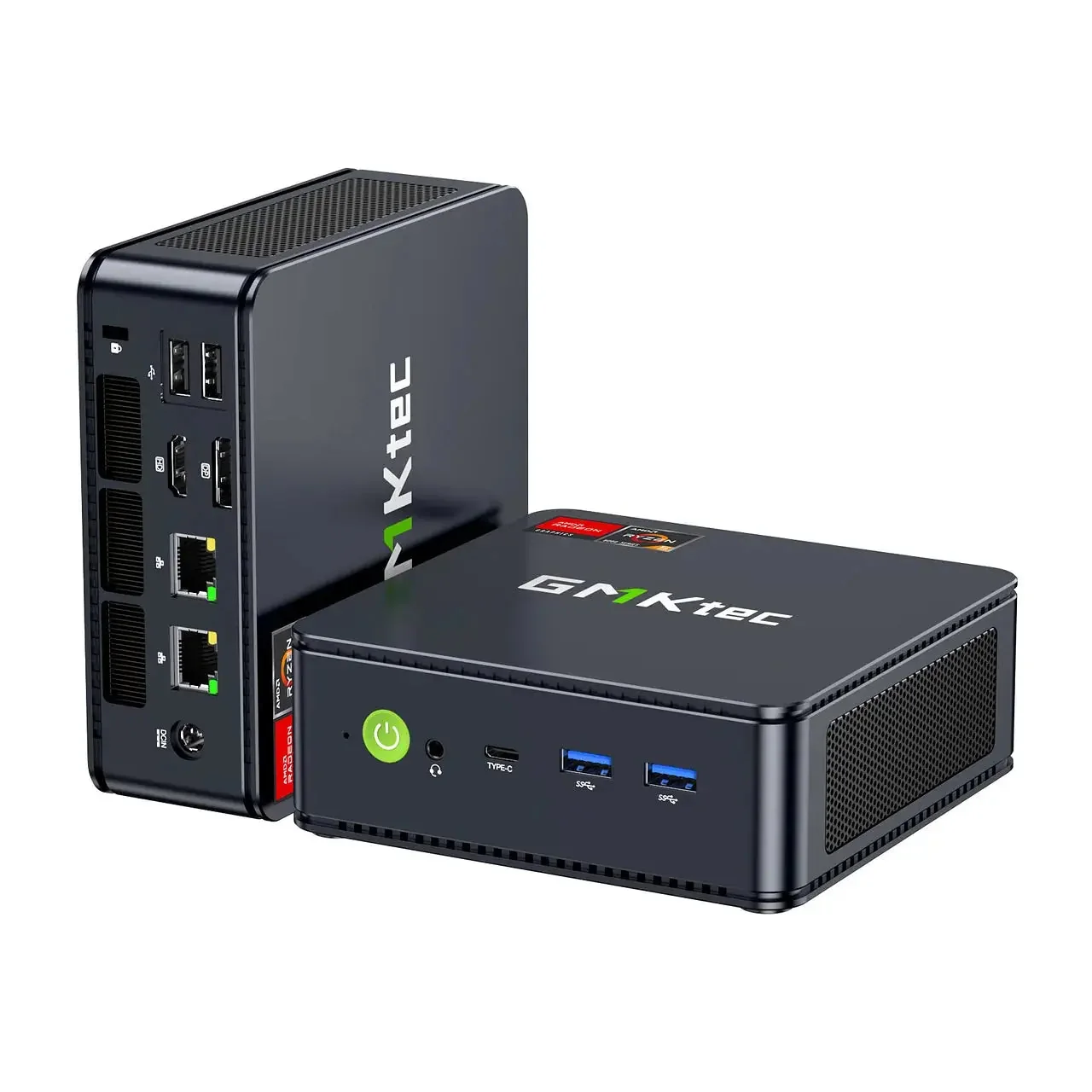
GMKtec M5 Ultra
By GMKtec · Desktop Computers · Phones & Computers
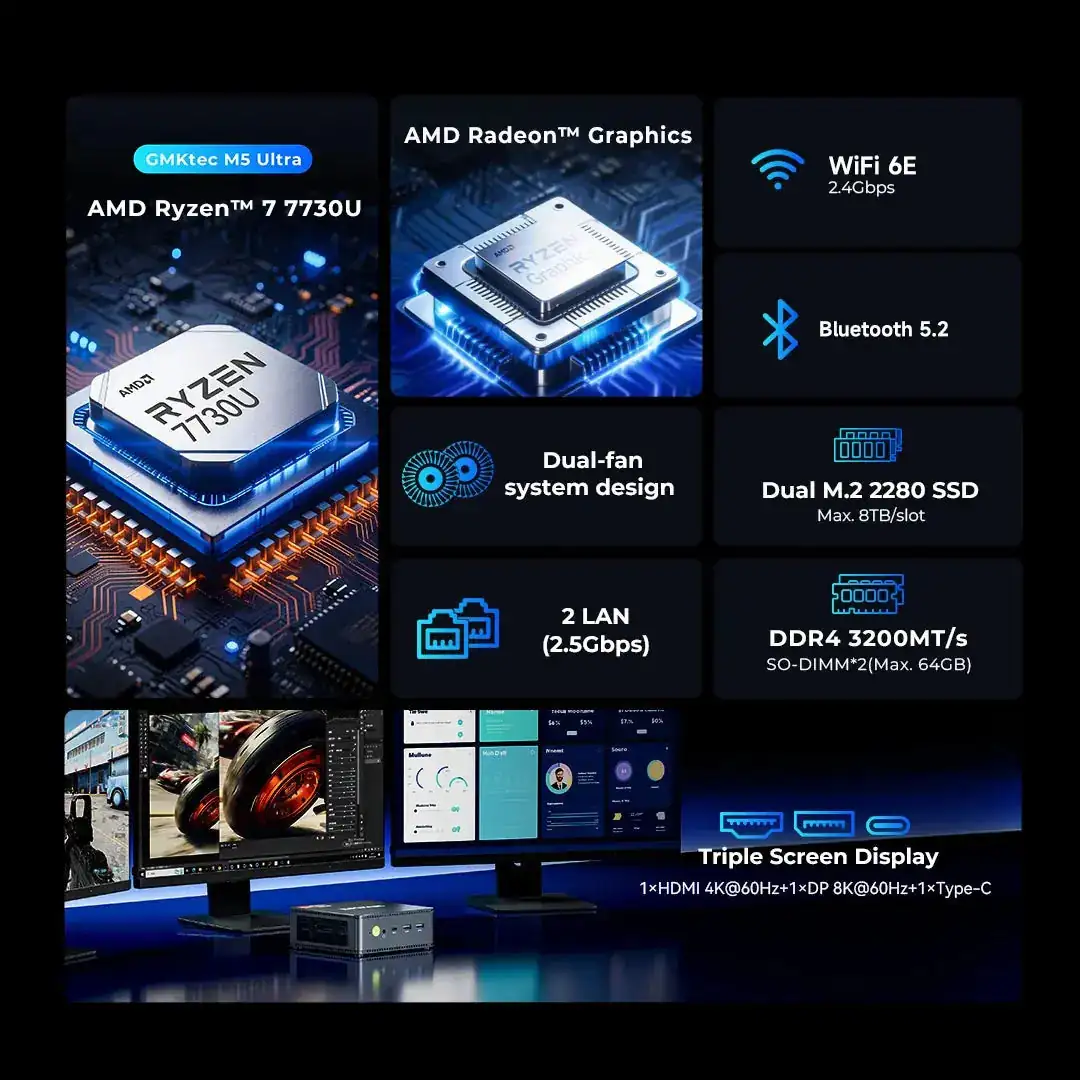
- AMD Ryzen 7 7730U (8 cores, 16 threads, up to 4.5 GHz)
- AMD Radeon Graphics (8 GPU cores, up to 2000 MHz)
- DDR4-3200, up to 64GB
- Dual M.2 2280 PCIe 3.0 slots, up to 16TB total
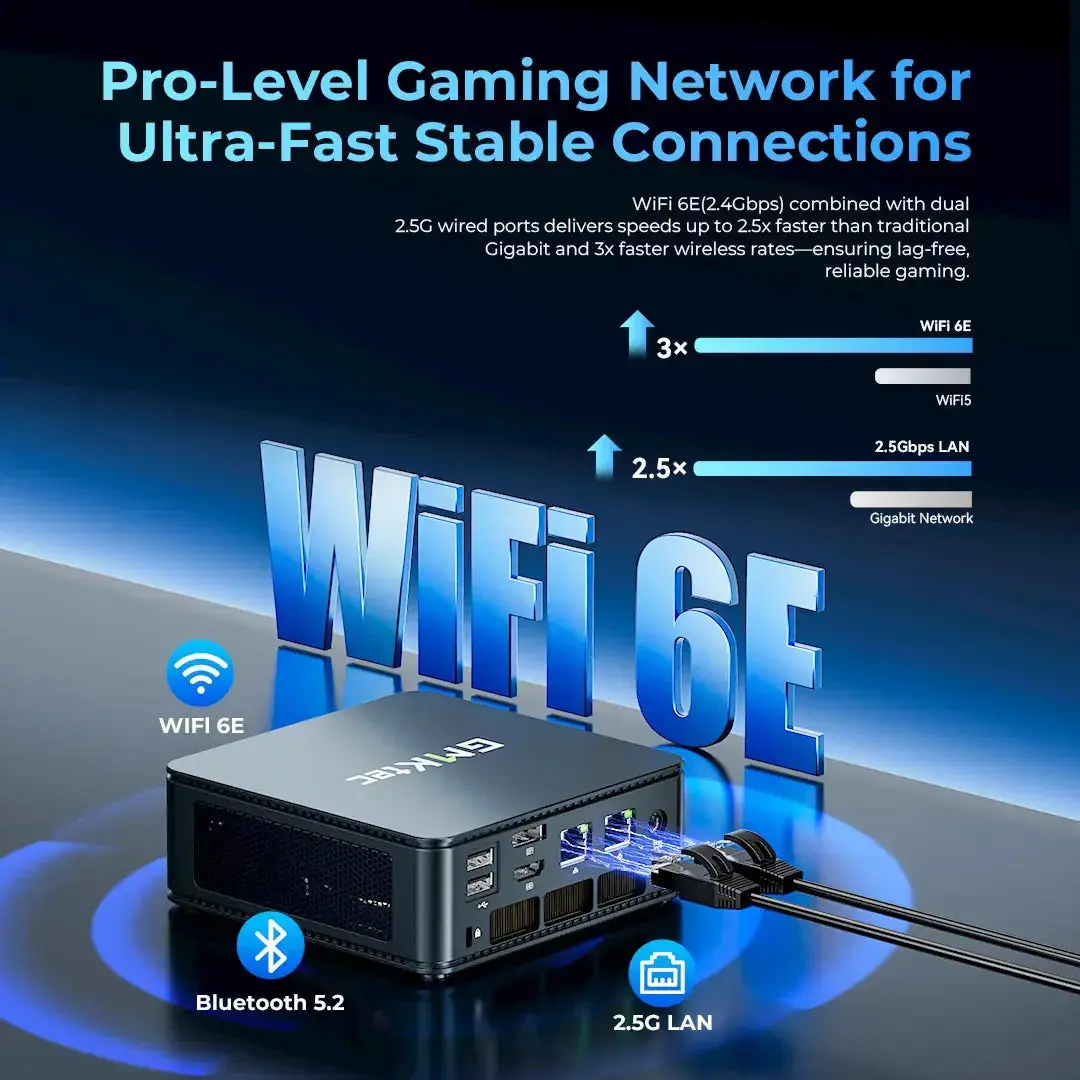
- WiFi 6E + BT 5.2 + Dual 2.5G LAN
Lowest price seen
~$339.99 (approx.)
from $339.99 at Amazon
- Amazon ~$339.99 (approx.)View at Amazon
- GMKtecView at GMKtec
- eBay (used) eBay: used, open-box, refurbishedView at eBay (used)
- eBayView at eBay
- NeweggView at Newegg
- NeweggBusinessView at NeweggBusiness
Prices are snapshots. Check the current price with the store.
Summary
A compact, quiet mini PC built around the 8-core Ryzen 7 7730U, aimed at homelab, server and light desktop duty. Check the platform before you buy: it runs DDR4 and PCIe 3.0, and the Vega 8 graphics will not carry modern gaming.
Strengths
- Dual 2.5 Gb Ethernet ports that are rare at this price.
- Two M.2 2280 slots and a 64 GB memory ceiling suit virtualization and NAS duty.
- RAM and SSD are socketed, not soldered, so both are user-upgradeable.
- Quiet in normal use and small enough at 528 g to move around.
- Windows 11 Pro comes pre-installed and factory activated.
- Owners report clean Linux installs on Fedora, Mint, Ubuntu and Pop!_OS.
Weaknesses
- The Zen 3 processor is two generations behind current Zen 4 mini PCs.
- Radeon Vega 8 graphics handle esports titles but not modern 1080p games or PS3/Switch emulation.
- DDR4 and PCIe 3.0 make the platform older than DDR5 and PCIe 4.0 rivals.
- The secondary fan cooling RAM and SSD can become bothersome in Performance mode and is not regulated in the BIOS.
- The one-year warranty is short for the category.
- Isolated reports of a sleep-wake bug that forces a hard reset.
Verified specifications
| Model | GMKtec NucBox M5 Ultra. |
|---|---|
| CPU | AMD Ryzen 7 7730U, 8 cores / 16 threads, Zen 3, 7nm. |
| Clocks | 2.0 GHz base, up to 4.5 GHz boost. |
| Cache | 4 MB L2 / 16 MB L3. |
| TDP | 10 W Silent / 15 W Balanced / 35 W Performance. |
| GPU | AMD Radeon Graphics (Vega 8, 8 cores), up to 2000 MHz; 2 GB shared VRAM. |
| RAM | 2 × SO-DIMM DDR4-3200, dual-channel, up to 64 GB. |
| Storage | 2 × M.2 2280 PCIe 3.0 slots; Slot 1 SATA + PCIe, Slot 2 PCIe only; up to 8 TB each. |
| Configuration | 32 GB RAM + 512 GB SSD. |
| Display | HDMI 2.0 (4K@60 Hz), DisplayPort 1.4 (up to 8K@60 Hz), USB-C DP. |
| Wireless | WiFi 6E (RZ616), Bluetooth 5.2. |
| Wired network | dual 2.5 Gb Ethernet (Realtek RTL8125). |
| USB | 2 × USB 3.2 Gen 2 front, 2 × USB 2.0 rear, 1 × USB-C 3.2 Gen 2 front (DP/PD). |
| Audio | 3.5 mm combination jack. |
| Power | external DC 19V/3.42 A (65 W) adapter. |
| OS | Windows 11 Pro pre-installed. |
| Cooling | dual-fan air cooling with a board-style heatsink. |
| Dimensions | 128.8 × 127 × 47.8 mm; 528 g bare, 1440 g full package. |
| In the box | power adapter, HDMI cable, VESA mount, quick-start guide, warranty card. |
| Warranty | one year. |
Full research notes and sources
Performance and benchmarks
MiniPC-Review.com tested the 7730U with 32 GB of dual-channel DDR4 and a PCIe 3.0 SSD, all in Performance mode at 35 W. It scored 78 points single-core and 414 points multi-core in Cinebench R24, about 10,856 in Cinebench R23 Multi, and 1,806 single / 5,939 multi in Geekbench 6. PassMark lands near 15,000 in Balanced mode and 20,000 in Performance mode. The pre-installed SSD reaches 3,624 MB/s sequential read and 2,642 MB/s write, which is the PCIe 3.0 ceiling.
The Radeon Vega 8 GPU is the weak spot. It scores 6,711 in 3DMark Wild Life, 3,154 in Fire Strike and 1,264 in Time Spy, and it is up to 26% slower than a Radeon 680M and up to 40% slower than a 780M in OpenCL. Native gaming tops out at esports titles, with League of Legends at 90–100 FPS and Counter-Strike 2 at 40–60 FPS on low settings, while Cyberpunk 2077 is not recommended. Emulation reaches full speed for PS2 and GameCube/Wii, is limited for PS3 and does not work for Switch.
Thermals, noise and power
Thermals depend on the power mode. In Balanced (15 W) the CPU sits at 55–70 °C and the fan is barely audible at 40–50 cm; in Performance (35 W) it climbs to 85–90 °C and the system can get noisy as the secondary fan spins up. That second fan cools the RAM and SSD and cannot be regulated in the BIOS. Power draw is 8–10 W at standby, 15–20 W balanced and up to 35 W under full load. For Proxmox duty, one reviewer logged 47 days as a development cluster node with no crashes and CPU temps below 72 °C under sustained loads; on Linux the bonded 2.5 Gb links reached 4.6 Gbps.
Upgrades, repairs and running costs
RAM and SSD are socketed SO-DIMM DDR4-3200 and M.2 2280 parts, so both are user-replaceable, and the chassis cover comes off with a screwdriver. One Reddit owner did a teardown and repaste and found the OEM thermal paste cheap. The CPU is soldered in the FP6 package and not user-replaceable, and there is no 2.5-inch drive bay. The US warranty is one year, non-transferable, with free repair while the customer pays shipping; a $50 extended warranty adds one or two years (GMKtec US).
Buying is really a configuration question. GMKtec’s US store lists the 7730U barebone at $299.99 (regular $389.99) and the Ryzen 3 5400U variant at $269.99, and a barebone needs your own RAM, SSD and OS. Micro Center lists the 32 GB + 1 TB version at $699.99 in-store only. Running costs are just electricity, at 8–10 W standby and 15–35 W under load, plus any RAM or SSD upgrade and a USB-C dock if you need one, since there is no Thunderbolt.
Is it worth it?
Under $300 the combination of dual 2.5 Gb Ethernet, two M.2 slots, a 64 GB ceiling and a 528 g chassis is hard to beat, and $301–$420 is still good for homelab or light desktop duty. Above $560 the value drops, because DDR5 and PCIe 4.0 machines with newer GPUs and longer warranties become available. If you do not need the dual NICs or the second M.2 slot, this is the wrong tool.
Which model this is
This page covers the GMKtec NucBox M5 Ultra with the AMD Ryzen 7 7730U in the 32 GB RAM + 512 GB SSD configuration. The US listing is ASIN B0FW43RV3D. GMKtec also sells a Ryzen 3 5400U variant in the same chassis. Don’t confuse it with the M5 Plus (Ryzen 7 5825U), M6 Ultra (Ryzen 5 7640HS) or M7 Ultra (Ryzen 7 PRO 6850U).
Sources
Manufacturer:
- NucBox M5 Ultra Ryzen 7 7730U spec sheet (GMKtec UK)
- Warranty, returns and refunds (GMKtec US)
- Extended warranty (GMKtec US)
Independent reviews:
- GMKtec M5 Ultra review and benchmarks (MiniPC-Review.com)
- GMKtec M5 Ultra 32GB + 512GB review and specs (Smart Home Compared)
- AMD Ryzen 7 7730U specifications (CPU-Monkey)
- AMD Ryzen 7 7730U benchmark (PassMark)
- Best mini PCs for Proxmox virtualization (Zamd.net)
- Best mini PCs for self-hosting (BoycottSystemd.org)
- Best home server PCs for pfSense (Supinfo-Projects.com)
Owner reports:
Stores: