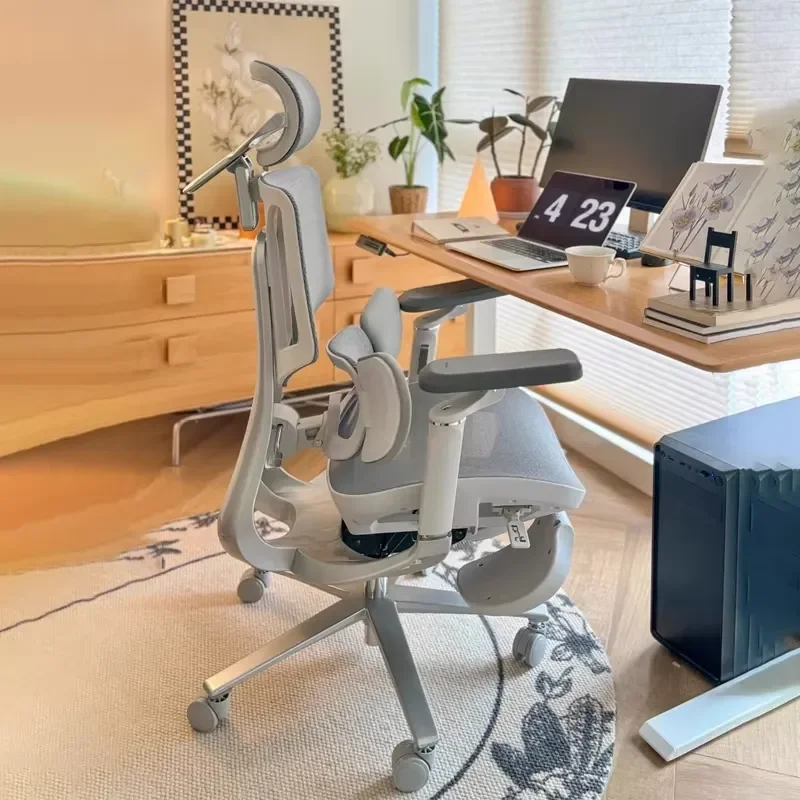
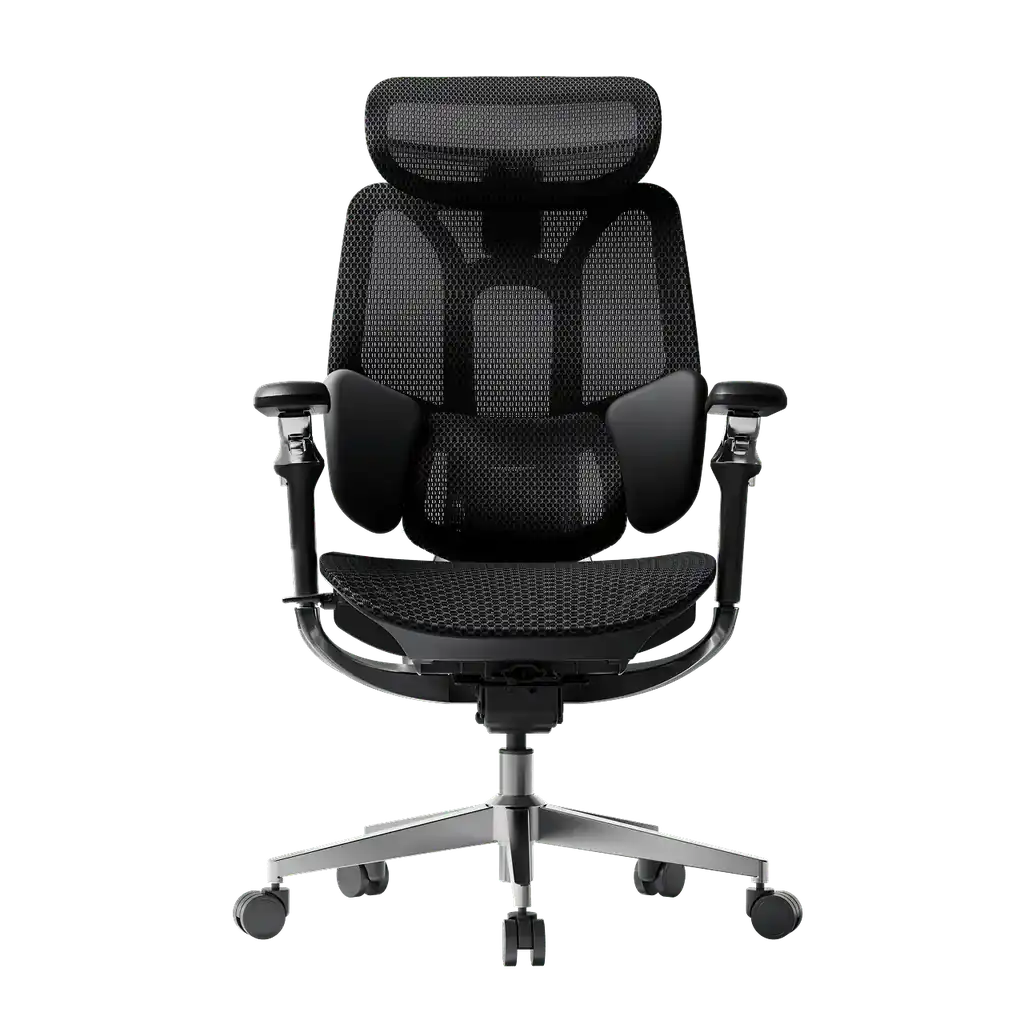
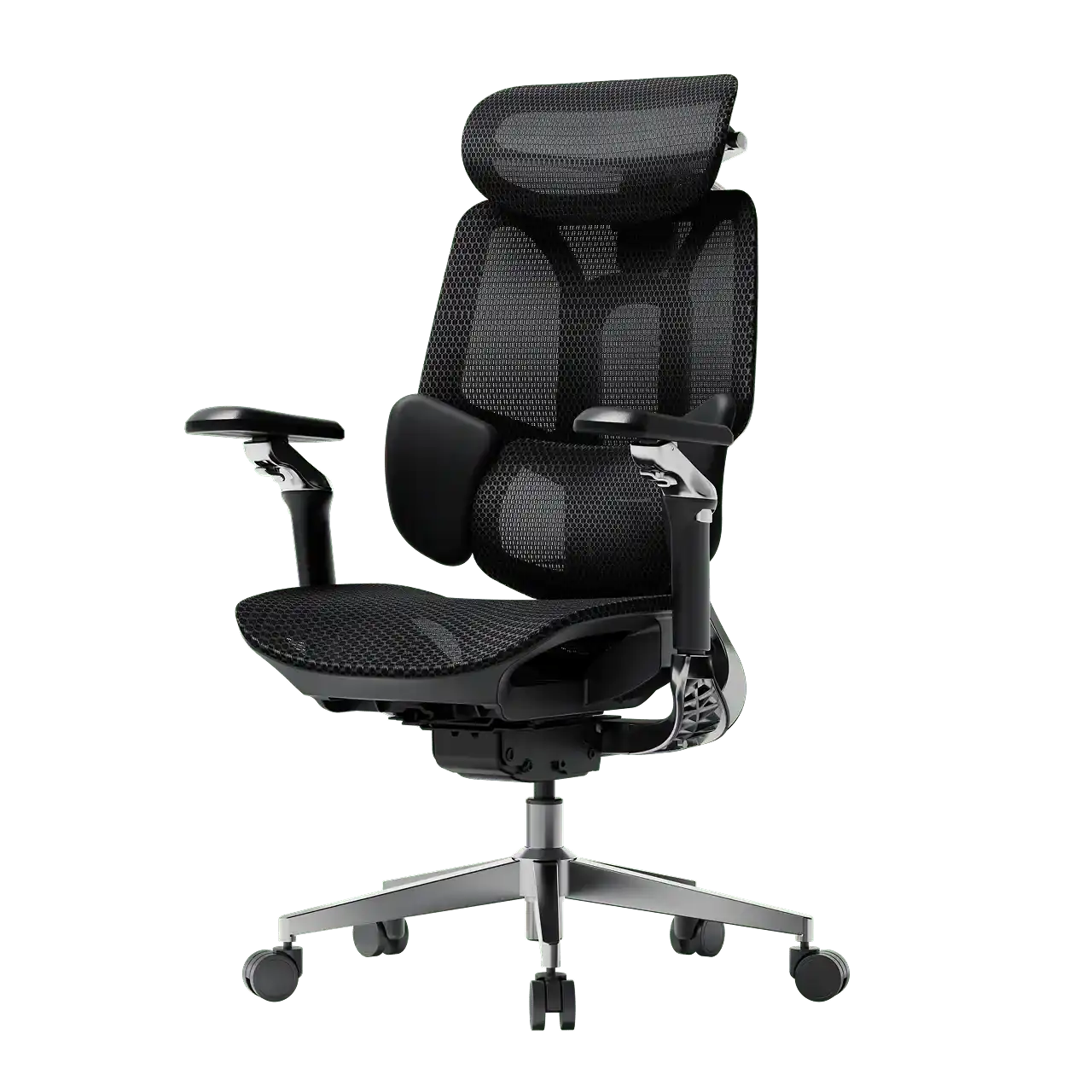
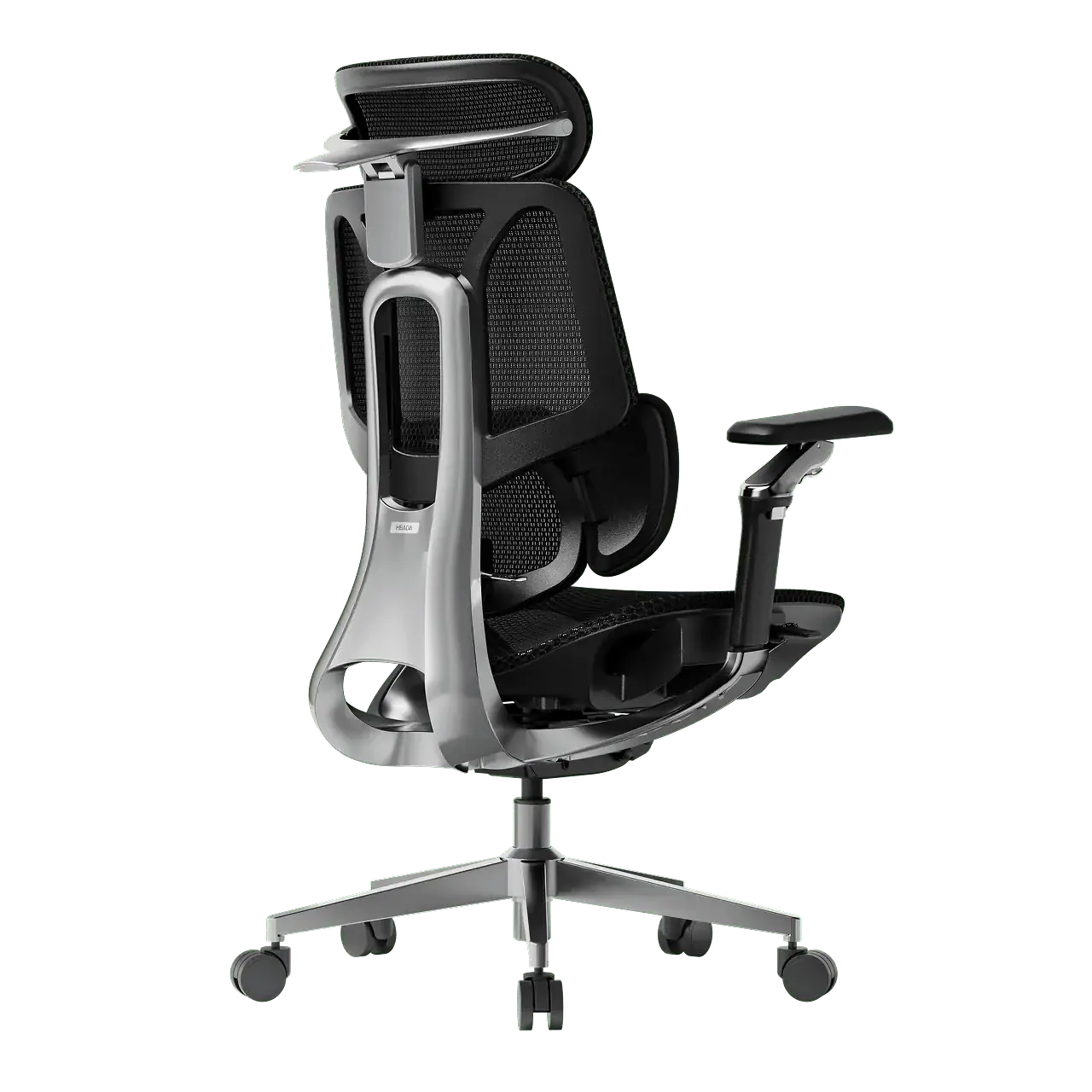
Hbada E3 Pro Ergonomic Office Chair
By Hbada · Office Chairs · Home & Workspace
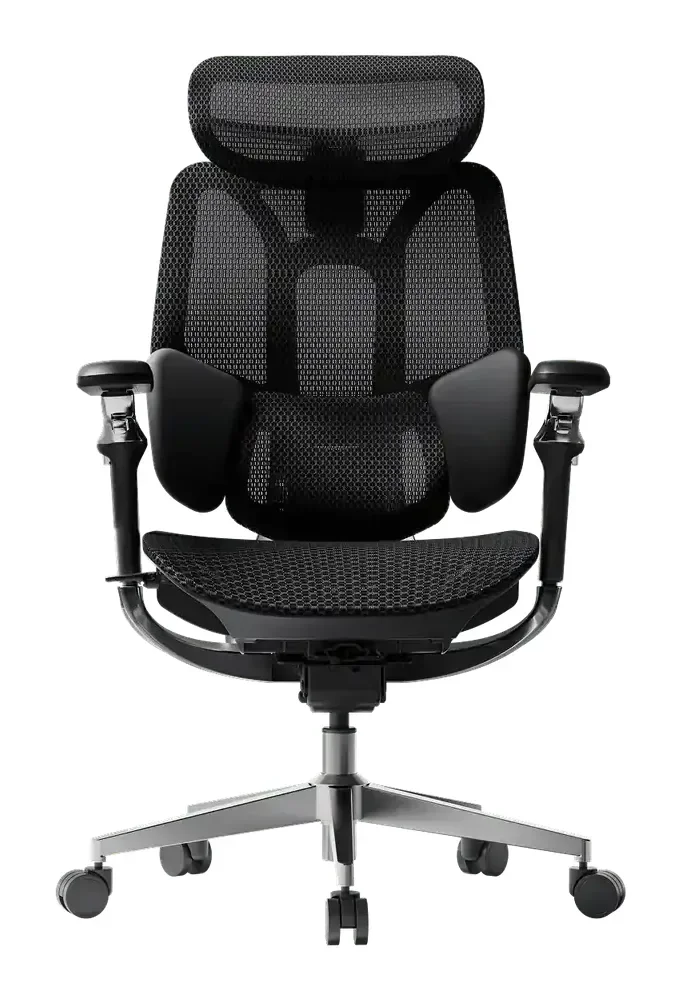
- 3-zone dynamic lumbar support
- 4D adjustable headrest
- 6D adjustable armrests
- Big-and-tall sizing
Lowest price seen
$519.00
from $519.00 at Hbada (D2C) · Checked Sep 28, 2026
- Hbada (D2C) $519.00View at Hbada (D2C)
- eBayView at eBay
- eBay (used) eBay: used, open-box, refurbishedView at eBay (used)
- AmazonView at Amazon
Prices are snapshots. Check the current price with the store.
Summary
A feature-dense mesh ergonomic chair — sliding seat, three-zone lumbar, 720° armrests, adjustable headrest and a 140° recline — for buyers who want maximum adjustment above all. Check the return policy before you buy: owners repeatedly report the lumbar pushes too hard and the armrests sit too high or too far forward for desk work.
Strengths
- Adjustment breadth uncommon at this price: sliding seat, multi-zone lumbar, mobile armrests, adjustable headrest and a deep recline in one chair.
- TechRadar’s reviewer found solid build, breathable mesh and useful lumbar and head support, with the chair still in good condition after 114 days of regular use.
- A 2026 owner using the chair 7–8 hours a day said the mesh stayed breathable and the adjustable lumbar was a real improvement over a basic office chair.
- Warranty service usually ships replacement parts rather than demanding a whole-chair return, and the major assemblies are separately replaceable.
Weaknesses
- The lumbar pushes too hard for many owners — pressure, heat or pain even at the minimum setting.
- Armrests don’t drop low enough or tuck in far enough for a natural elbow position close to a normal desk.
- Moving parts don’t always hold their setting: headrests drop too easily, lumbar positions slip, controls feel loose.
- Several owners find the mesh scratchy against bare skin, and one 2026 owner reported a visible mesh defect.
- Owners around 185–190 cm report the chair feels too low at an ordinary desk despite being inside the advertised height range.
- Support and returns can be slow and costly, and policies differ by seller and country.
Verified specifications
| Maximum load | 330 lb (150 kg) on the current US model. |
|---|---|
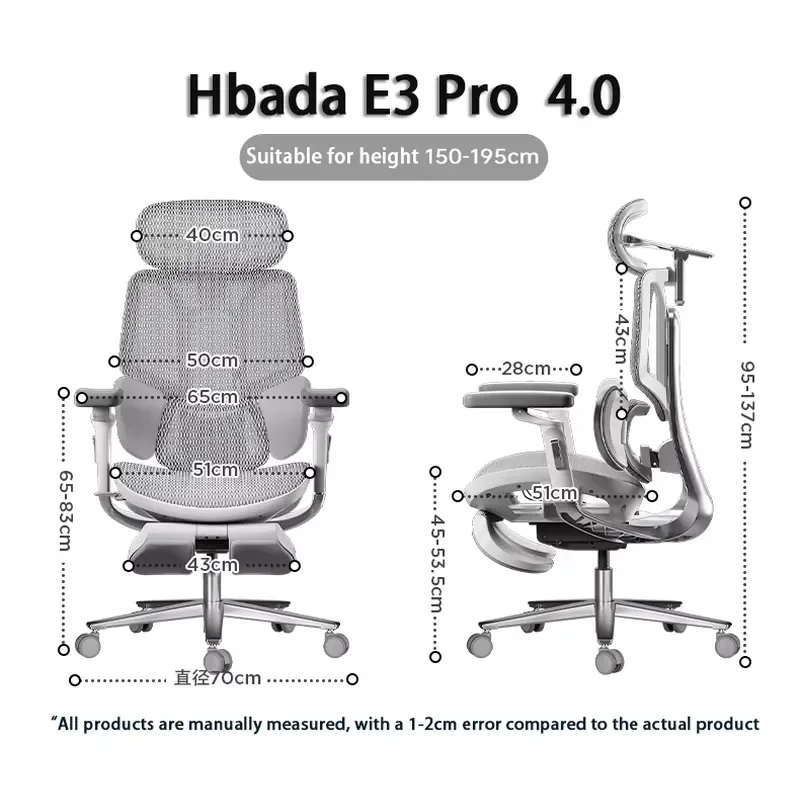
| Recommended user height | 5'1"–6'5" (155–195 cm). |
| Dimensions | 26.0–27.95 in deep × 25.6 in wide × 43.7–51.8 in high. |
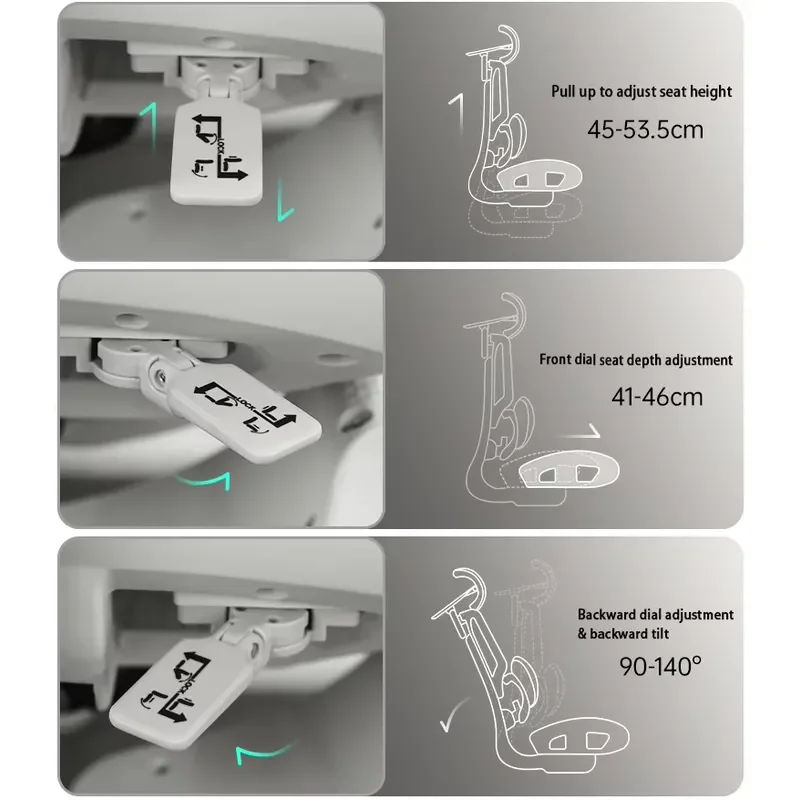
| Seat | about 20.27 in wide and 17.7–19.7 in deep, with about 2 in (50 mm) of depth slide; seat height runs roughly 46–52 cm depending on configuration. |
| Backrest | 80 mm height adjustment plus a 60 mm independent lumbar lift on the 2026 model. |
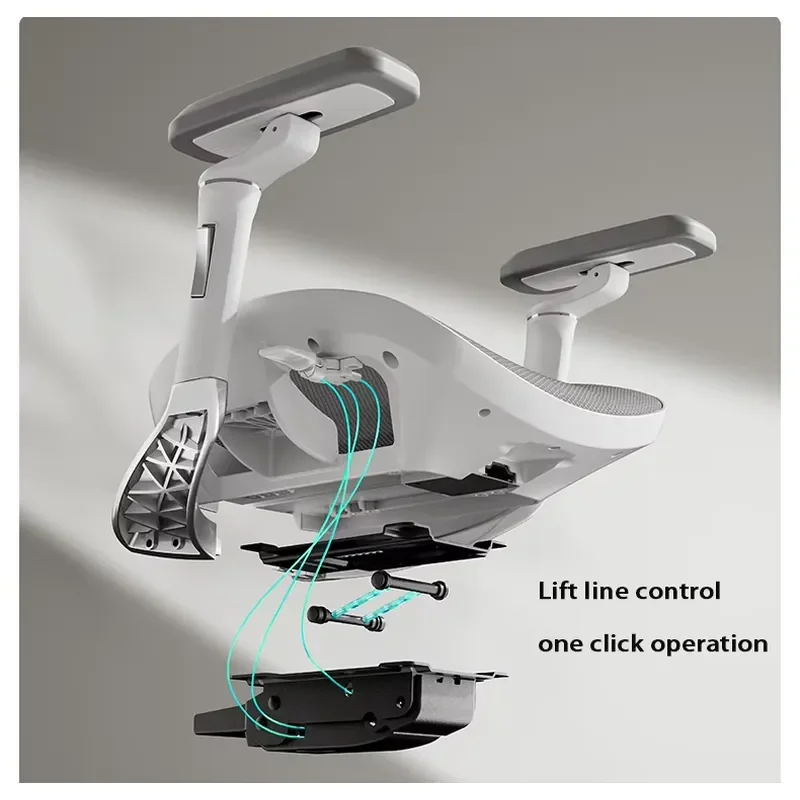
| Lumbar | three-zone adaptive system with about 1.18 in (30 mm) glide, 2.36 in (60 mm) height adjustment, 1.26 in (32 mm) forward/back travel with lock and 40° side-wing rotation. |
| Armrests | 720° dual-rotation design with independent 360° rotation at the pad and arm body, about 2.76 in (70 mm) height travel and 2.36 in (60 mm) fore/aft travel. |
| Headrest | 4D dual-axis adjustable. |
| Recline | to 140° with four lock positions. |
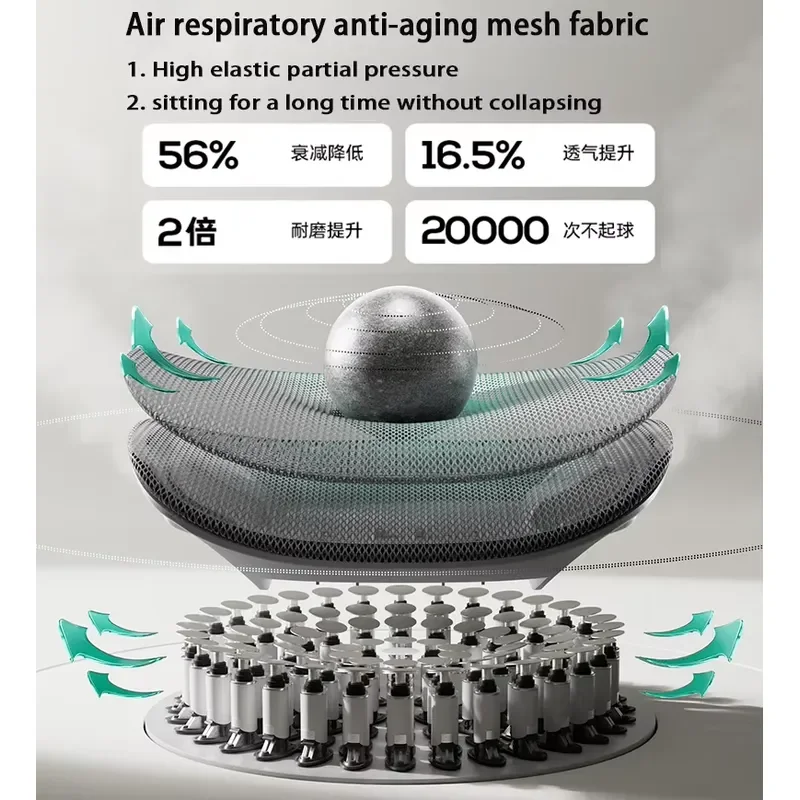
| Construction | breathable mesh seat and back (Hbada also calls it CloudMesh) on a steel frame and steel five-star base, five casters; the footrest depends on which configuration you buy. |
| Assembly | arrives mostly built; you attach the base, seat and backrest. |
| Warranty | component-dependent — base, gas lift and casters up to 5 years, while mechanism, arms and backrest are described at 3 years. |
Full research notes and sources
Fit decides this chair
The advertised range runs to 195 cm, but Hbada’s own fit guide says height alone cannot determine fit, and owner experience backs that up: a 185 cm owner reported the seat sits too low at a 73 cm desk even at maximum height, and a 190 cm owner said the same. The measurements that decide daily comfort — minimum armrest height, how far the lumbar retracts — are not published at all.
The lumbar is the sharpest edge. A June 2025 owner reported growing lower-back irritation and heat after long sitting even with the lumbar backed off, and an August 2026 owner of the 2026 revision independently described the lumbar pressing too hard even when retracted and lowered. If your back already dislikes prominent lumbar support, treat that pattern as close to a dealbreaker.
Armrests and adjustments
The 720° armrest system sounds unlimited, but the recurring complaint is about its minimum position: a January 2026 owner said the lowest armrest position still prevented normal mouse use, and a June 2026 owner described excessive height and wobble. Owners also describe a headrest that drops under light pressure, lumbar wings knocked out of position, and an awkward gap between the upright position and the next recline lock. One buyer who ordered five chairs received two with defective armrests.
Durability, warranty and repairs
Nobody has published independent long-term wear data for this chair, and the manufacturer’s cycle-test claims are unaudited. TechRadar’s tested unit — an earlier revision rated 300 lb — was in good condition after 114 days, which argues against calling the chair broadly fragile but is too short to prove multi-year durability. One owner reported lumbar-cover deterioration and control problems after about five months; that is a single report, not a failure rate.
The warranty is component-dependent: core load-bearing parts (base, gas lift, casters) are covered up to 5 years, while mechanism, arms and backrest are described at 3 years. Hbada says it diagnoses defects remotely from photos or video and ships replacement parts rather than requiring a whole-chair return, which is better than a sealed appliance. There are no scheduled consumables and no electricity to run, so annual upkeep is effectively nothing; wear parts like casters, the gas lift, mesh and armrests are failure-driven, not calendar items. Routine care is basic: check the fasteners now and then, keep the caster axles clean, and keep abrasive cleaners off the mesh.
Is it worth it?
Buy it on sale, and buy it where returning it is easy. The adjustment list is the argument for this chair: if the lumbar and armrest geometry suit your body and desk, it is a lot of chair for the money. Hbada’s direct US price checked in October 2026 was $549 without the footrest and $569 with it, and TechRadar’s earlier review also placed the tested chair near $549.99, so the mid-$500s has been the going rate rather than a one-off. EU direct was €599, with Cdiscount listings around €519.99 without the footrest and €569.99 with it.
At $450 or less it is strong value for someone who already knows assertive lumbar support and tall armrests fit them. From about $451 to $525 it is fair but conditional on fit and an easy return. At $549–569 it should not be bought on the feature list alone. Above about $600 it is weak value unless you have test-sat one and prefer its geometry; marketplace listings above $800–900 in 2026 were reseller outliers, not reference prices. The direct store advertises a 30-day in-home trial, but preference returns can carry a shipping deduction and require the original packaging, so keep the box.
Which model this is
This page covers the Hbada E3 Pro, currently branded the E3 Pro 2026 Edition on Hbada’s store and described there as the fourth-generation model. The Amazon listing is ASIN B0CQ4K1KXT. Hbada says the older third-generation E3 Pro is being phased out, so confirm which revision a listing ships: older listings describe an earlier revision rated 300 lb, which is the one TechRadar tested, while the current model is rated 330 lb. A current manual index ties the 2026 edition to a different listing, and whether every US order now ships the 2026 revision is not confirmed. Don’t confuse it with the wider E3 series, and note the footrest is a configuration option, not a given.
Sources
Manufacturer:
- Hbada E3 Pro 2026 Edition product page
- Hbada E3 Pro 2026 US direct product page
- Hbada E3 Pro product page
- Hbada E3 Series product page
- Hbada fit guide: why height alone cannot determine office chair fit
- Hbada E3 Pro 2026 Edition page (JP/EN)
- Hbada UK warranty and service policy
- Hbada US warranty and service
- Hbada return and refund policy
- Hbada shipping, troubleshooting and replacement-parts FAQ
Independent reviews:
Owner reports:
- Do not buy the Hbada E3 Pro (r/OfficeChairs)
- Honest review, armrest defects (r/OfficeChairs)
- Months of 6–8 h/day use (r/OfficeChairs)
- E3 Pro 2026 edition owner review (r/OfficeChairs)
- Too low for a 185 cm owner (r/OfficeChairs)
- Desk and armrest fit, returns (r/OfficeChairs)
- Support and product quality experience (r/OfficeChairs)
- Wrong configuration, EU support experience (r/OfficeChairs)
- Hbada EU owner reviews (Trustpilot)
Parts and stores: