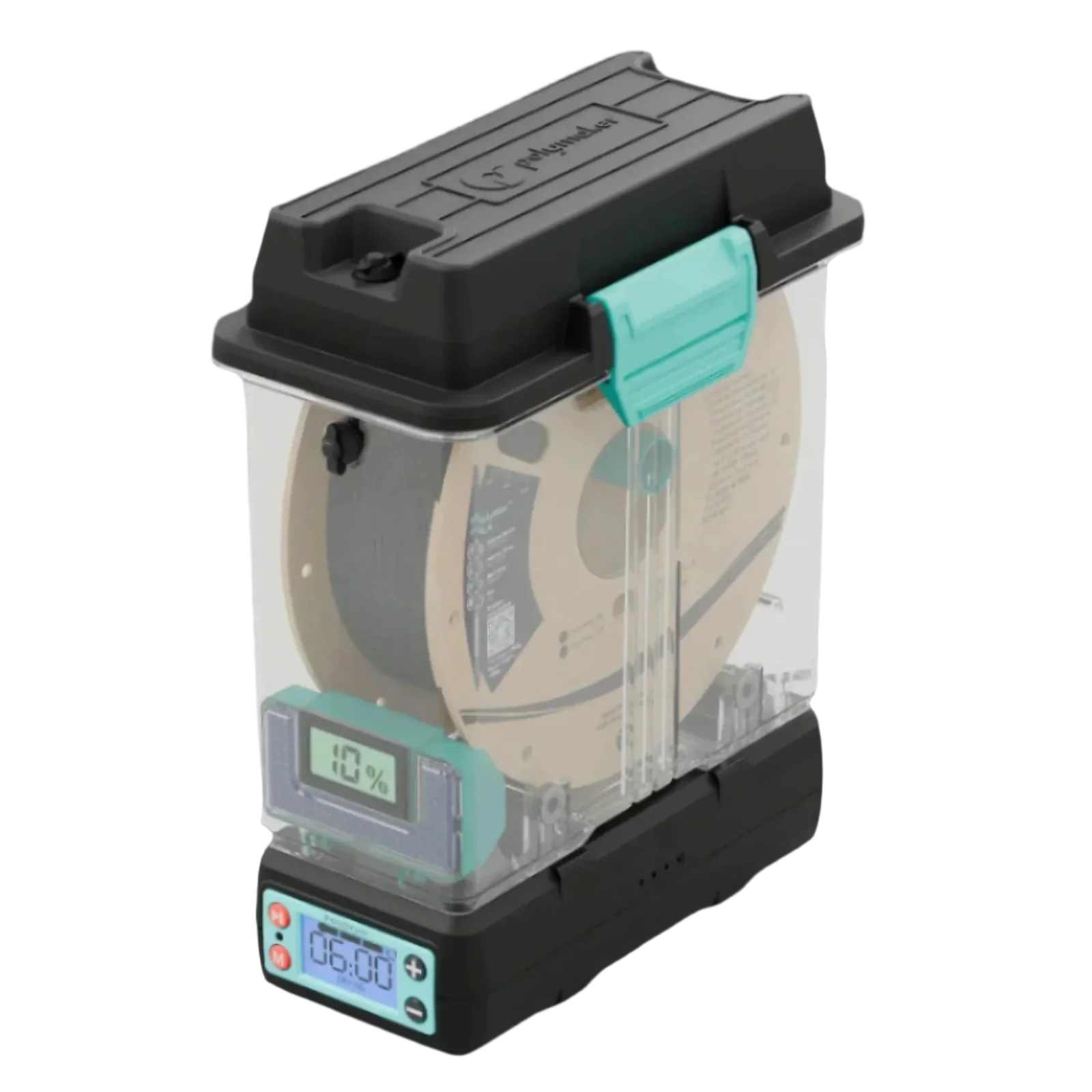
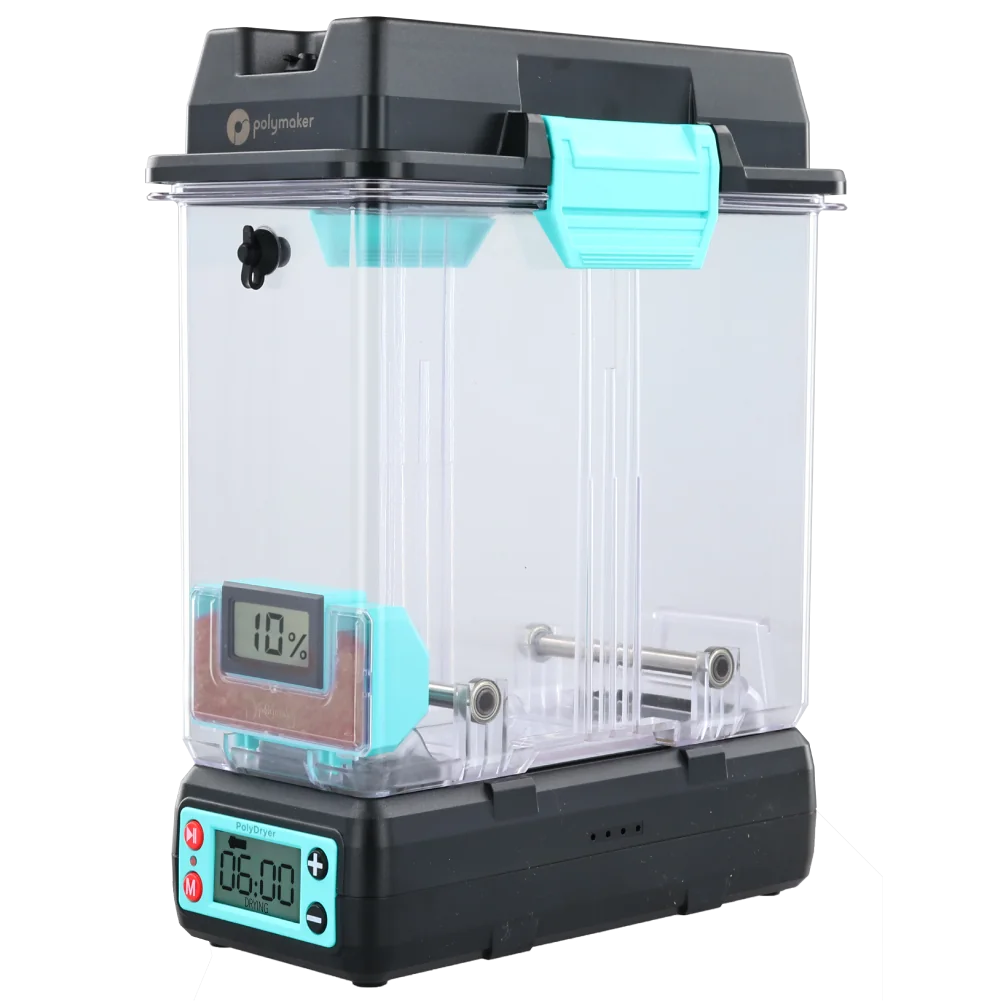
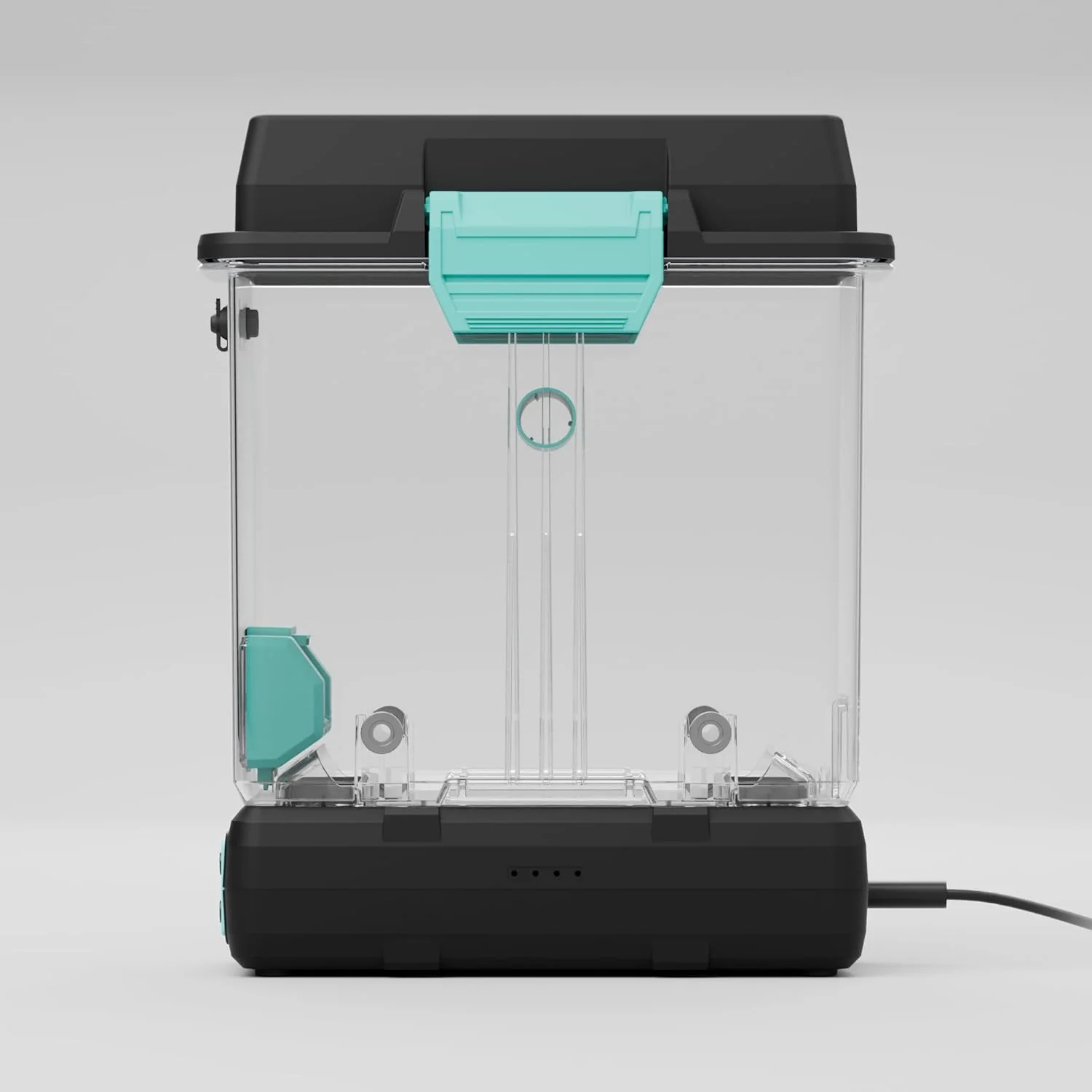
Polymaker PolyDryer Filament Dryer and Storage Box
By Polymaker · Filament Dryers · 3D Printing
- Maximum working power 68W, power adapter input AC 100-240V 50/60Hz, output DC 24V 68W
- Product size 235(L) x 120(W) x 290(H) mm
- Maximum capacity 205 mm diameter x 78(H) mm spool with filament -- 1kg spools
Lowest price seen
$79.99
from $79.99 at PartsBuilt.com · Checked Oct 3, 2026
- PartsBuilt.com $79.99View at PartsBuilt.com
- MatterHackers $79.99View at MatterHackers
- HartSmart Products $79.99View at HartSmart Products
- Nuzira $79.99View at Nuzira
- GigaParts $79.99View at GigaParts
- Ultimate 3D Printing Store $87.99View at Ultimate 3D Printing Store
- AliExpress Yunou44 Store $138.43View at AliExpress
- PolymakerView at Polymaker
- Micro CenterView at Micro Center
- Best BuyView at Best Buy
- B&H PhotoView at B&H Photo
- eBayView at eBay
- eBay (used) eBay: used, open-box, refurbishedView at eBay (used)
- AmazonView at Amazon
Prices are snapshots. Check the current price with the store.
Summary
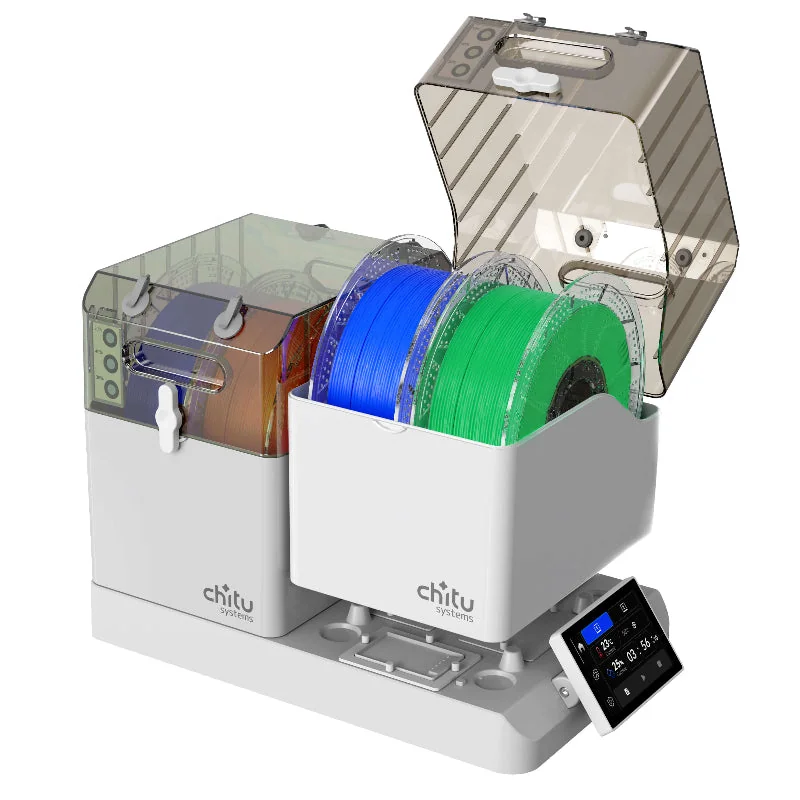
A modular single-spool filament dryer: a 68 W powered base with a removable sealed storage box you can dry from, store filament in and print from later. Its dry-and-store workflow is the reason to buy it, but check for fan noise and weak chamber temperatures when the unit arrives.
Strengths
- One Dry Dock serves several sealed boxes, so a prepared spool goes from drying to storage to printing without repacking.
- 3DWithUs measured the box hygrometer dropping from 44% to 25% RH across a six-hour PETG cycle, with less stringing, fewer bubbles and cleaner walls.
- MyTechFun’s comparison recorded 92% of the test water removed after 30 minutes, 102% after one hour, a 56 °C maximum and 40.5 dB at 50 cm.
- The silica-gel desiccant is reusable, so it is regenerated rather than replaced on a schedule.
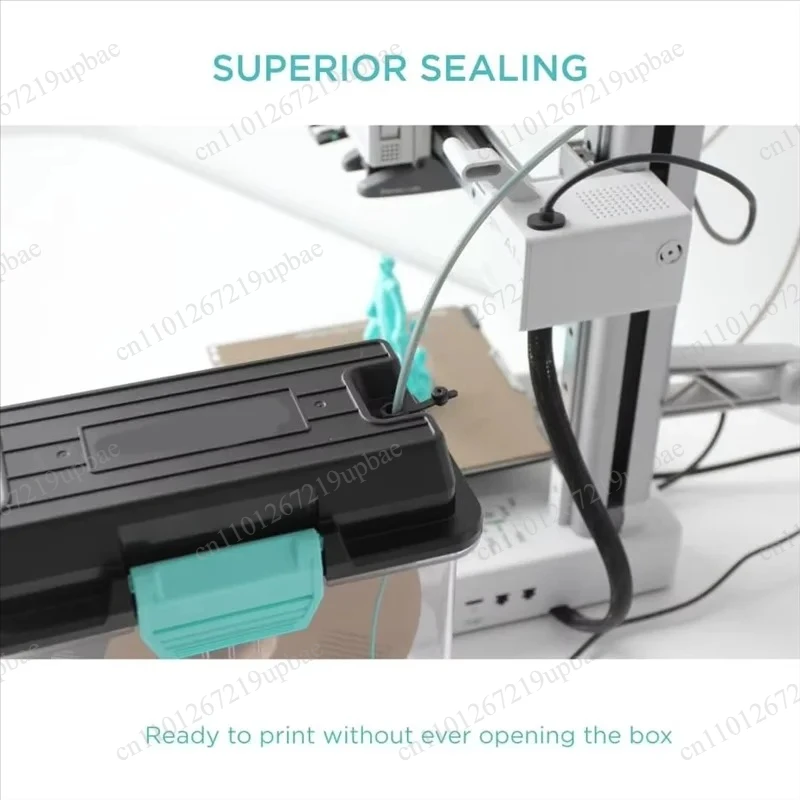
- The sealed box holds low humidity for weeks or months, letting owners print straight from storage.
- Polymaker publishes printable parts and generic replacement specs for tubing, hygrometers and power adapters.
Weaknesses
- Owners repeatedly report fan noise or a piercing high-frequency whine, and some units are much louder than others.
- One owner measured under 40 °C on the highest setting after more than two hours at 18 °C ambient, and a store review calls the dock thermally undersized.
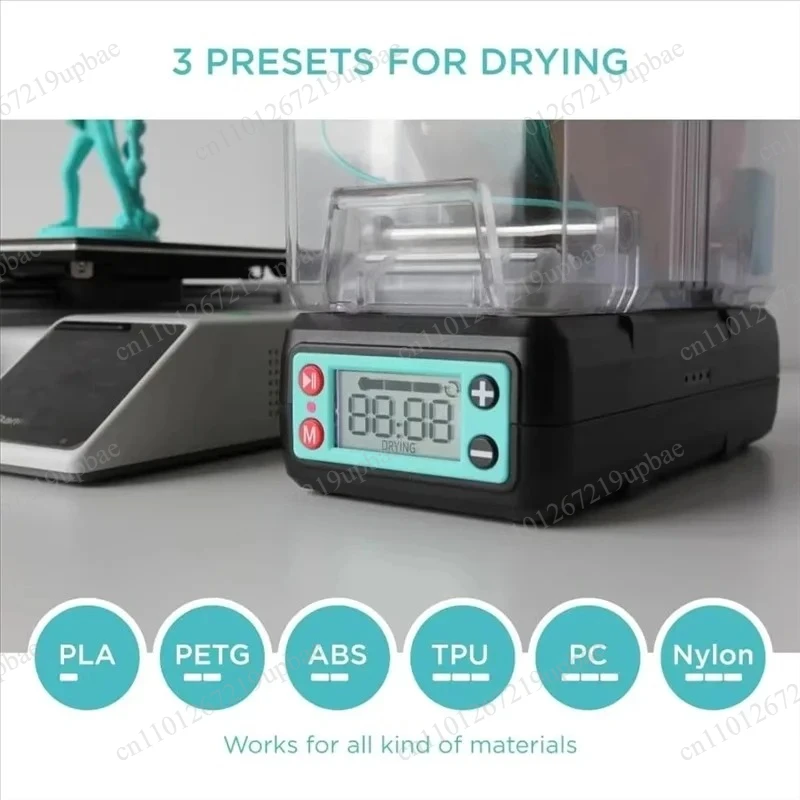
- The dock uses three preset power levels, so there is no direct target temperature to enter.
- It dries one spool at a time; running several materials means extra boxes rather than a bigger base.
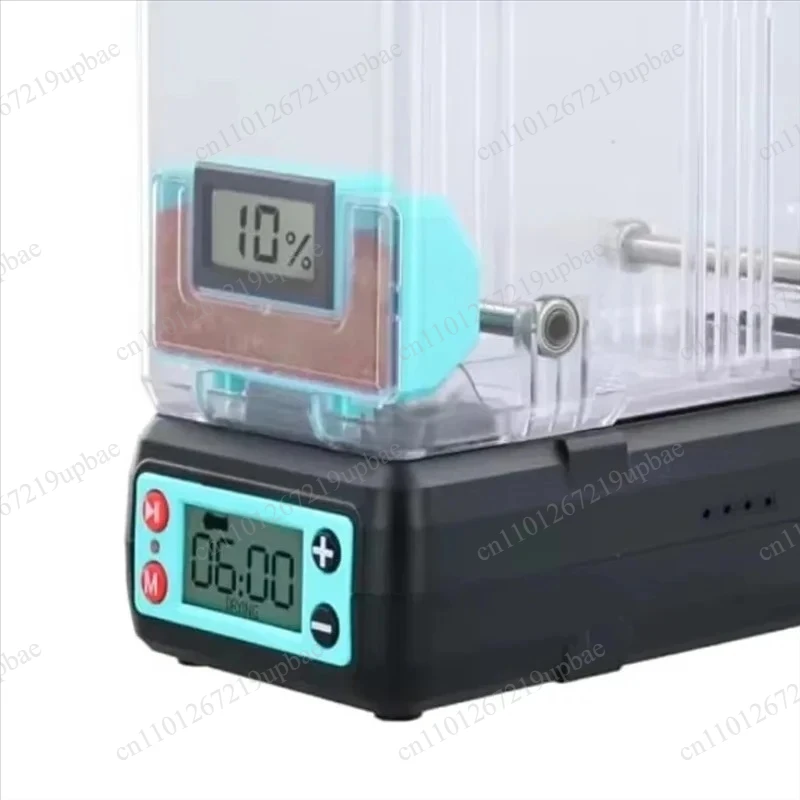
- The end-of-cycle beeper is loud, and the built-in hygrometer bottoms out at 10% RH.
- The standard box tops out at 1 kg spools, and the 3 kg Box XL needs a separate dock adapter.
Verified specifications
| Form | powered Dry Dock base plus a removable sealed PolyDryer Box with a desiccant and hygrometer holder. |
|---|---|
| Maximum working power | 68 W. |
| Power adapter | 100–240 V AC, 50/60 Hz input, 24 V DC output. |
| Dimensions | 235 × 120 × 290 mm (dryer); the standard box is 235 × 120 × 235 mm. |
| Maximum standard spool size | 205 mm diameter by 78 mm width. |
| Filament diameters | 1.75, 2.85 and 3.00 mm. |
| Supported materials | PLA, PVB, PETG, ABS, ASA, TPU, PA, PC, PVA, PolySupport and PolySupport for PA12. |
| Drying control | three preset power levels rather than a target temperature. |
| Highest internal temperature range | 68–73 °C, which Polymaker says varies around the spool. |
| Recommended working environment | 20–35 °C and below 90% RH. |
| Box capacity | standard up to 1 kg spools; the Box XL supports up to 3 kg. |
| Included desiccant | 30 g color-changing silica gel. |
| Warranty | one year. |
| Safety | the manual says not to leave the dryer unattended in Continuous Mode. |
Full research notes and sources
The modular workflow
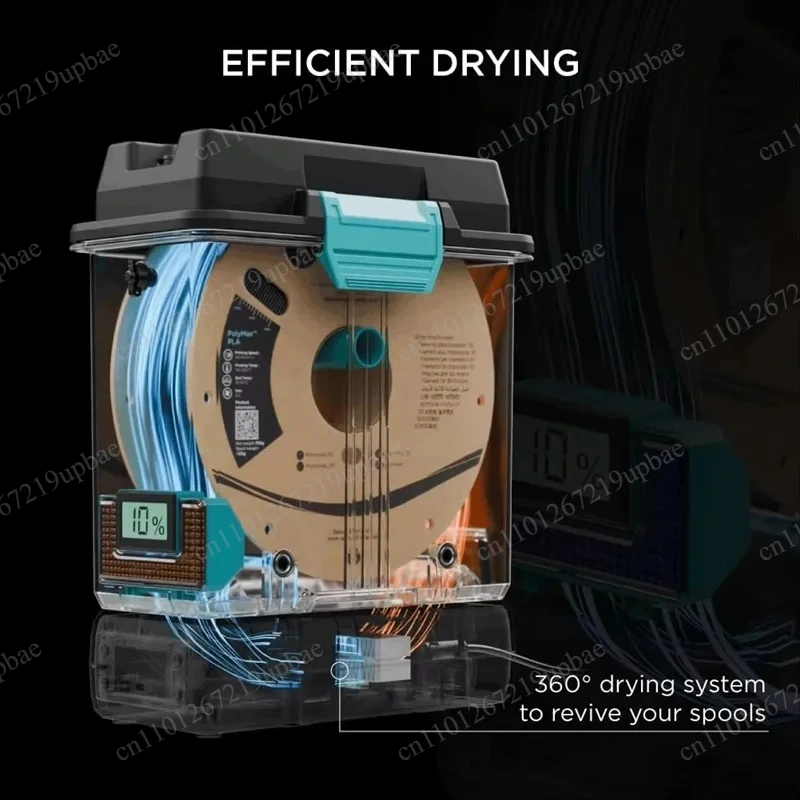
PolyDryer’s differentiator is the box, not raw heat. Dry a spool on the 68 W Dry Dock, remove the sealed box, keep the filament sealed with desiccant and print directly from it later. Because one dock can serve several boxes, you avoid repacking filament into bags every time. Independent reviewers like it: 3DWithUs tested a six-hour PETG cycle and saw the box hygrometer fall from 44% to 25% RH, with less stringing, fewer bubbles and cleaner walls in the before-and-after print, and it recommended the system for both hobbyists and print farms. A 2026 GoodPrints3D review says the removable box is the reason to pay more than for a simple heater, while noting multi-spool users may be better served by a larger dryer. The desiccant is reusable — Polymaker says regenerate it in the Dry Dock at power level 3 for about eight hours, or in an oven at 100–120 °C for one to two hours.
Heat and airflow
The controls are three preset power levels, not a target temperature. Polymaker gives only a highest internal range of 68–73 °C and warns that the reading varies around the spool and depends on room temperature, material, spool size and moisture. MyTechFun’s standardized comparison measured 56 °C maximum and 40.5 dB at 50 cm while still removing moisture strongly. Owner reports are more mixed: one measured under 40 °C on the highest setting after more than two hours at 18 °C ambient and questioned whether the heater was defective, and a review on Polymaker’s store calls the dock thermally undersized and slow to dry PLA. These are owner measurements rather than lab results, and no official per-power-level target is published, so treat any single reading as an observation, not the product’s rating. Polymaker attributes the spread to the 360° airflow gradient inside the chamber.
Noise
Fan noise is the most consistent complaint. Owners describe a loud high-frequency whine, and several mention an unusually loud end-of-cycle buzzer. Unit-to-unit variation looks real: a 2025 owner with two PolyDryers said one was much louder than the other, and another with three units said one sounded like a bearing problem while the other two were quieter. A separate 2025 thread describes a piercing tone audible through doors, while others in the same discussion said their units sounded like ordinary fans. Nobody has published a failure rate, so treat the fan as a variability risk — test the dock as soon as it arrives and exchange it within the return or warranty window if it is loud.
Parts and running costs
There is no subscription and the desiccant is regenerated rather than replaced, so electricity is the main recurring cost. At the 68 W maximum, a six-hour cycle uses at most about 0.408 kWh — roughly $0.06–$0.14 at an illustrative $0.15–$0.35/kWh — and one cycle a week comes to about 21.2 kWh a year, or roughly $3.18–$7.43. Real use should be lower because 68 W is the ceiling. The bigger ownership cost is expansion: Polymaker lists an extra standard box at $29.99, a four-box pack at $109.99, the Dry Dock alone at $59.99 and the Box XL at $69.99. Polymaker’s wiki points to generic replacements for PTFE tubing, hygrometers and power adapters, plus printable plastic parts, so tubing and fittings are cheap to keep going. There is no official replacement fan, heater or controller part.
Is it worth it?
The complete Dock plus Box is $79.99 at Polymaker’s store and MatterHackers, though both show it backordered or out of stock, and Polymaker’s US wholesale channel marks the standard unit discontinued or final sale. At $60 or less it is a strong buy because the sealed modular storage is hard to duplicate with a conventional dryer; from $61 to $80 it is fair if the removable boxes are the reason you are buying. Above $80, compare Creality’s Space Pi at $66, which offers direct 45–70 °C control, a 0–48 hour timer and real-time humidity monitoring, or SUNLU’s FilaDryer S2 at $44.99 for cheap single-spool drying. If you routinely dry several spools at once, SUNLU’s FilaDryer S4 at $116.99 holds four.
Which model this is
This page covers the standard Polymaker PolyDryer — the powered Dry Dock plus a removable PolyDryer Box for single-spool dry-and-store use. The standard box takes spools up to 1 kg; the larger Box XL takes up to 3 kg and needs a separate dock adapter for active drying. Don’t confuse it with generic cereal-box dry storage or with the co-branded SnapDryer, which shares closely related hardware but is a separate product.
Sources
Manufacturer:
- Polymaker PolyDryer store page
- Polymaker PolyDryer specifications and after-sales policy
- PolyDryer user manual
- Polymaker US wholesale PolyDryer listing
Independent reviews:
- 3DWithUs: Polymaker PolyDryer review
- MyTechFun: filament dryer comparison
- GoodPrints3D: PolyDryer 2026 review
- GigaParts: PolyDryer owner review
Owner reports:
- PolyDryer whining-noise reports (r/polymaker)
- Unit-to-unit fan-noise variation (r/polymaker)
- High-pitched fan-noise discussion (r/polymaker)
- Cannot get above 40 °C on the highest setting (r/polymaker)
- Low-temperature and airflow complaint (r/3Dprinting)
- PolyDryer storage-box feedback (r/polymaker)
Parts and stores: