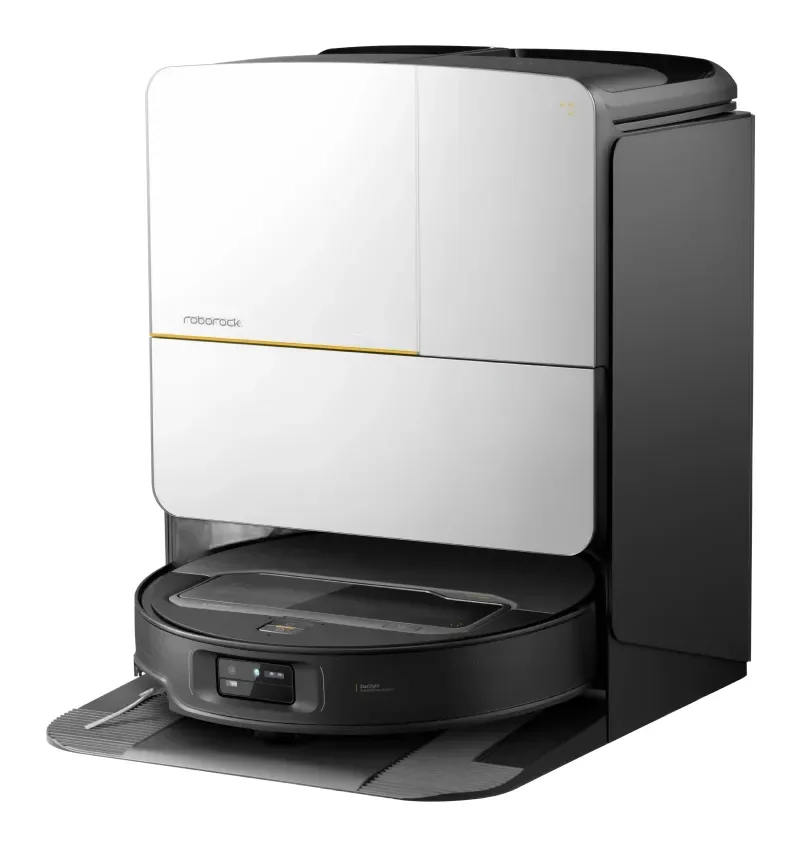
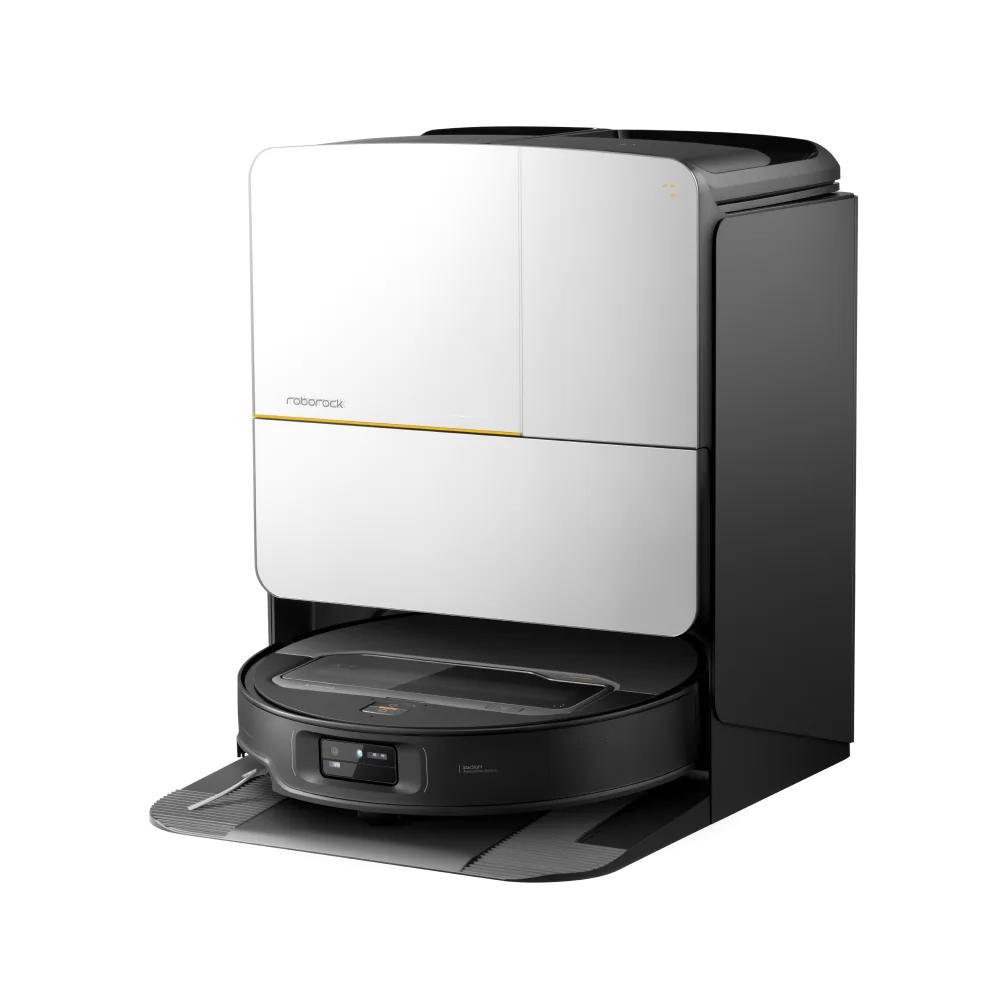
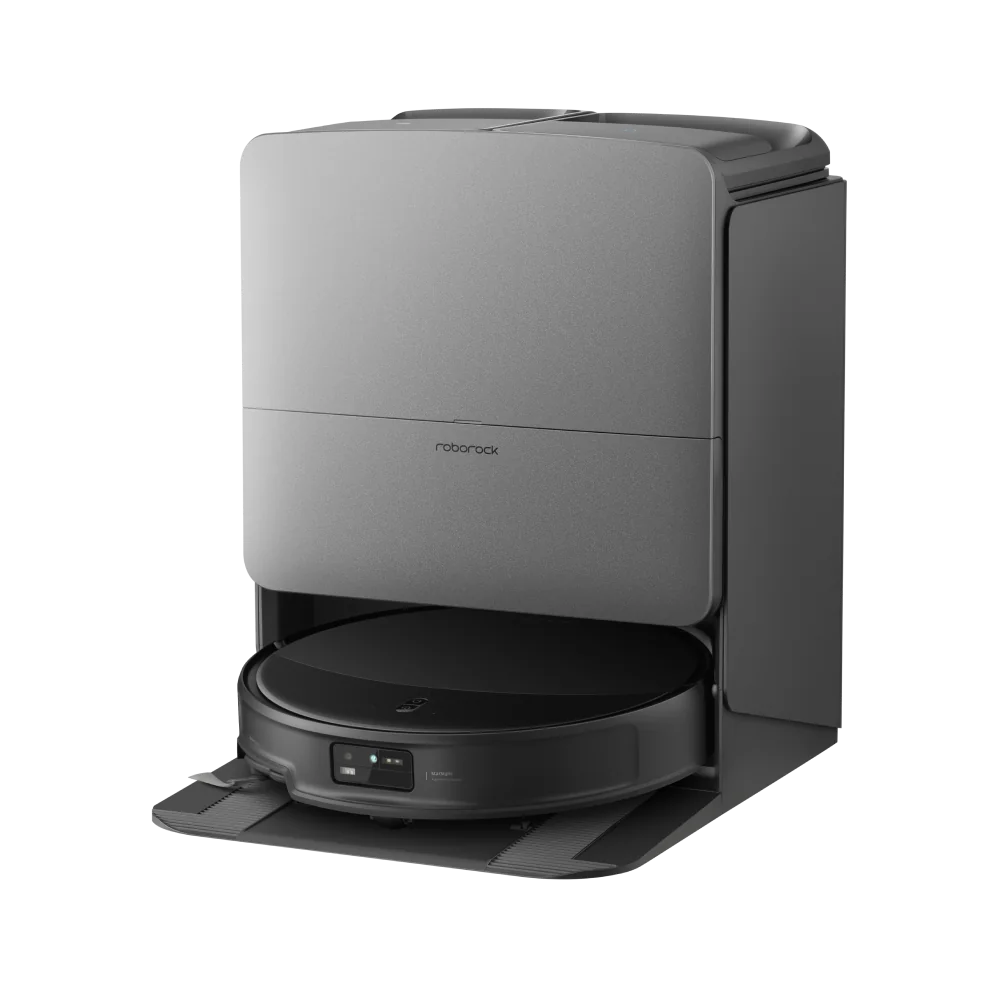
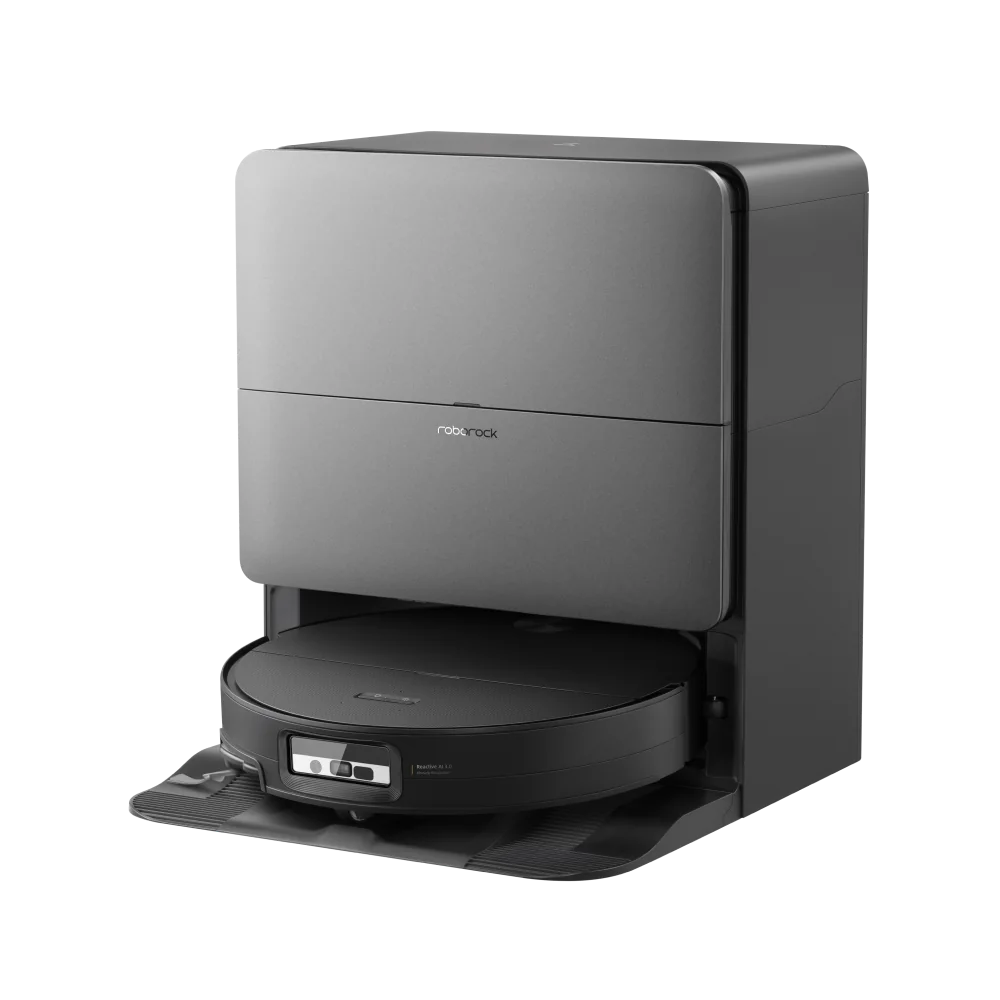
roborock Q7 M5 Robot Vacuum and Mop Combo
By Roborock · Robot Vacuums · Cleaning & Smart Home
- 10,000 Pa HyperForce suction
- JawScrapers Comb main brush + tangle-free side brush
- Electronically controlled water tank, 3 adjustable flow levels
- Detachable mop for simultaneous vacuum and mop
- Precise LiDAR navigation
Lowest price seen
$159.99
from $159.99 at Roborock US (D2C, Shopify) · Checked Sep 28, 2026
- Roborock US (D2C, Shopify) $159.99View at Roborock US (D2C, Shopify)
- eBayView at eBay
- eBay (used) eBay: used, open-box, refurbishedView at eBay (used)
- AmazonView at Amazon
Prices are snapshots. Check the current price with the store.
Summary
A dockless robot vacuum and mop with a claimed 10,000 Pa of suction, LiDAR navigation and a passive mop, and it measures well above its price class for vacuuming. The mop does not lift or scrub and there is no small-object avoidance, so clear cables and socks before a run.
Strengths
- Vacuum Wars measured sealed suction of 2.24 kPa against a test average of 0.83 kPa.
- Debris pickup was strong on hard floor and carpet, especially with fine debris.
- LiDAR mapping and routing scored above average for the price class.
- The mop removed dried stains well: a score of 158 against a 93 average.
- Leaving the mop module off gives normal vacuum-only runs.
- Roborock sells exact-model filters, mop cloths, a main brush and the main-brush cover.
Weaknesses
- Carpet deep cleaning scored only 75%, exactly the comparison average.
- The long-hair test left 43% of the hair wrapped around the brush, worse than the 38% average.
- The mop does not lift, vibrate or actively scrub.
- There is no small-object avoidance, so cables, socks and toys must be cleared first.
- The manufacturer lists two conflicting body dimensions for the same robot.
- Mopping left about 2.0 g of water against a 1.01 g average, and some owners report the brush assembly dislodging on rugs.
Verified specifications
| Model | US dockless Roborock Q7 M5; robot model RRA0TCP; charging dock SPCDZ03RR; power supply BLJ18WD200080P-U. |
|---|---|
| Suction claim | 10,000 Pa HyperForce, measured by Roborock in Max+ mode with a full battery on an IEC-based method. |
| Navigation | 360-degree PreciSense LiDAR with multi-level maps, room controls, no-go zones, recharge/resume and carpet auto-boost. |
| Small-object avoidance | none; Roborock says the Q10 series adds a structured-light module over the Q7 series. |
| Main brush | a JawScrapers comb brush with an anti-tangle design; the side brush is also marketed as anti-tangle. |
| Mopping | a removable passive mop with three electronically controlled water-flow levels and a DEEP+ slow-path mode. |
| Mop lift or scrubbing | none; the Q10 line is the step-up that adds mop lifting. |
| Battery | 14.4 V, 3200 mAh lithium-ion. |
| Charging time | Roborock says about 3 to 4 hours from 20% to 100%. |
| Dustbin and water tank | 400 ml and 270 ml. |
| Wi-Fi | 2.4 GHz only per exact-model retailer documentation. |
| Weight | 7.28 lb; the retail box is 14.37 × 5.91 × 18.50 in and 10.58 lb. |
| Dimensions | the manufacturer lists either 353 × 353 × 99 mm or 12.80 × 12.80 × 3.90 in, and the two figures conflict. |
| Dock | 160 × 70 × 101 mm. |
| Power | input 100–240 V, 50/60 Hz, 0.8 A; robot charging 20 V, 0.8 A. |
| Warranty | one year for new products bought through Roborock or an authorized US channel. |
| In the box | robot, charging dock, mop module, moisture-proof mat, mop cloth, adapter and manual. |
Full research notes and sources
Suction and the 10,000 Pa claim
The suction figure is measured, not just advertised. Vacuum Wars recorded 2.24 kPa of sealed suction against a test average of 0.83 kPa, and general debris pickup was strong on hard floor and carpet, even though measured airflow of 11 CFM was below the 16.4 CFM average. Navigation efficiency was about 0.84 m²/min against a 0.70 average. What the headline does not buy is premium carpet cleaning: carpet deep cleaning scored 75%, right at the average, and embedded pet-hair pickup came in at 79% against 81%. Treat the 10,000 Pa claim as a strong budget vacuum, not a specialist deep cleaner.
The mop, navigation and setup
The mop is passive: a fixed pad with no lift, vibration or active scrubbing, controlled through three water-flow levels. DEEP+ changes the travel pattern and speed, not the mop mechanics, and testing found little difference among the water settings and about 2.0 g of residual water against a 1.01 g average, so streaking is possible. It removed dried stains well, which makes it useful for daily dust and light messes, and it is meant to come off when you only want to vacuum. Empty unused water after mopping and use only Roborock-recommended solution.
Navigation is the strongest reason to choose this over random-navigation budget robots. LiDAR mapping, room controls, multi-level maps, no-go zones, recharge/resume and carpet auto-boost give it a mature experience. The tradeoff is blind spots: there is no camera or structured-light object recognition, so the manual warns that wiring and clutter must be removed, high-pile carpets are unsupported and dark carpets can reduce effectiveness. Owner threads also mention rugs rolling up, rug-edge stalling and the brush cover coming loose on rugs.
Hair, upkeep and running costs
The anti-tangle brush is easier to service than a conventional roller, but it is not maintenance-free: the independent 7-inch hair test left 43% wrapped around it, worse than the average, so long-haired households should expect regular cleaning regardless of the marketing. The manual’s schedule is main-brush cleaning every two weeks and replacement every 6–12 months, side-brush cleaning monthly and replacement every 3–6 months, mop washing after each use and replacement every 3–6 months, and filter cleaning every two weeks and replacement every 6–12 months.
Parts support is better than many budget robots. From Roborock, a washable filter two-pack is $24.99, the main brush is $8.00 on sale against a $16.05 reference price, the mop cloth two-pack is $12.59 against a $17.99 reference, and the main-brush cover is $19.99 (Roborock, October 2026); a stable first-party side-brush price was not found. Using only exact parts at those prices, routine consumables run about $33 to $66 a year, and there are no dock bags on this dockless model. There is no defensible electricity figure, because Roborock publishes a 20 V/0.8 A charging rating but not measured wall energy per charge.
Is it worth it?
Buy it near the lower end of its price band. Roborock’s US page showed $159.99 in October 2026 while its store collection showed $149.99, and a June 2026 deal was recorded at $142.48, the lowest price seen at the time. At $150 or less it is an excellent buy if vacuuming and mapping matter more than obstacle avoidance or active mopping; $151 to about $175 stays good value; from about $176 to $200 comparison shopping matters more, because the passive mop, 3200 mAh battery and missing object avoidance become noticeable. Above $200 it is hard to justify: the Q7 M5+ is $249.99 direct with the same robot plus an auto-empty dock, and the Q10 S5+ is $279.99 with obstacle avoidance, mop lifting and active vibration mopping. Note that Roborock’s own eBay store has listed a new Q7 M5 at $239.99 and a certified-refurbished unit at $199.99, so channel pricing can be much worse than buying direct. If long hair is your main problem, do not pay a premium for the anti-tangle claim alone.
Which model this is
This page covers the US dockless Roborock Q7 M5, ASIN B0DSJF7ZDJ, with robot model RRA0TCP and charging dock SPCDZ03RR. Do not merge Q7 M5+ auto-empty dock failures into this page, since those failures are dock-specific; the robot hardware is shared, but the dock is not. The exact-model runtime is workload-dependent: third-party sources disagree between 150 and 180 minutes, and the manual confirms the 3200 mAh battery but no single runtime figure.
Sources
Manufacturer:
- Roborock US Q7 M5 product page
- Roborock US store collection and current prices
- Roborock Q series official comparison page
- Roborock Q7 M5 FCC user manual
- Roborock Q7 M5 FCC user manual PDF
- Roborock US service and warranty
- Roborock US refund policy
- Roborock Q7 M5+ page with Q7 M5/M5+ accessory prices
- Roborock mop cloth two-pack for Q7 M5 and Q7 M5+
- Roborock Q10 S5+ product page
Independent reviews:
Owner reports:
- Q7 M5 tries to spray water when turning on (r/Roborock)
- Brush falling out on Q7 M5 (r/Roborock)
- Q7 M5 roller brush thread (r/Roborock)
- Q7 M5 failed after only three weeks (r/Roborock)
- Q7 M5 huge disappointment thread (r/Roborock)
- Q7 M5 battery and Wi-Fi owner reports (r/Roborock)
- Q7 M5 keeps getting stuck on one carpet (r/Roborock)
Price and retailer coverage: